

Meet Scraggles (2026)
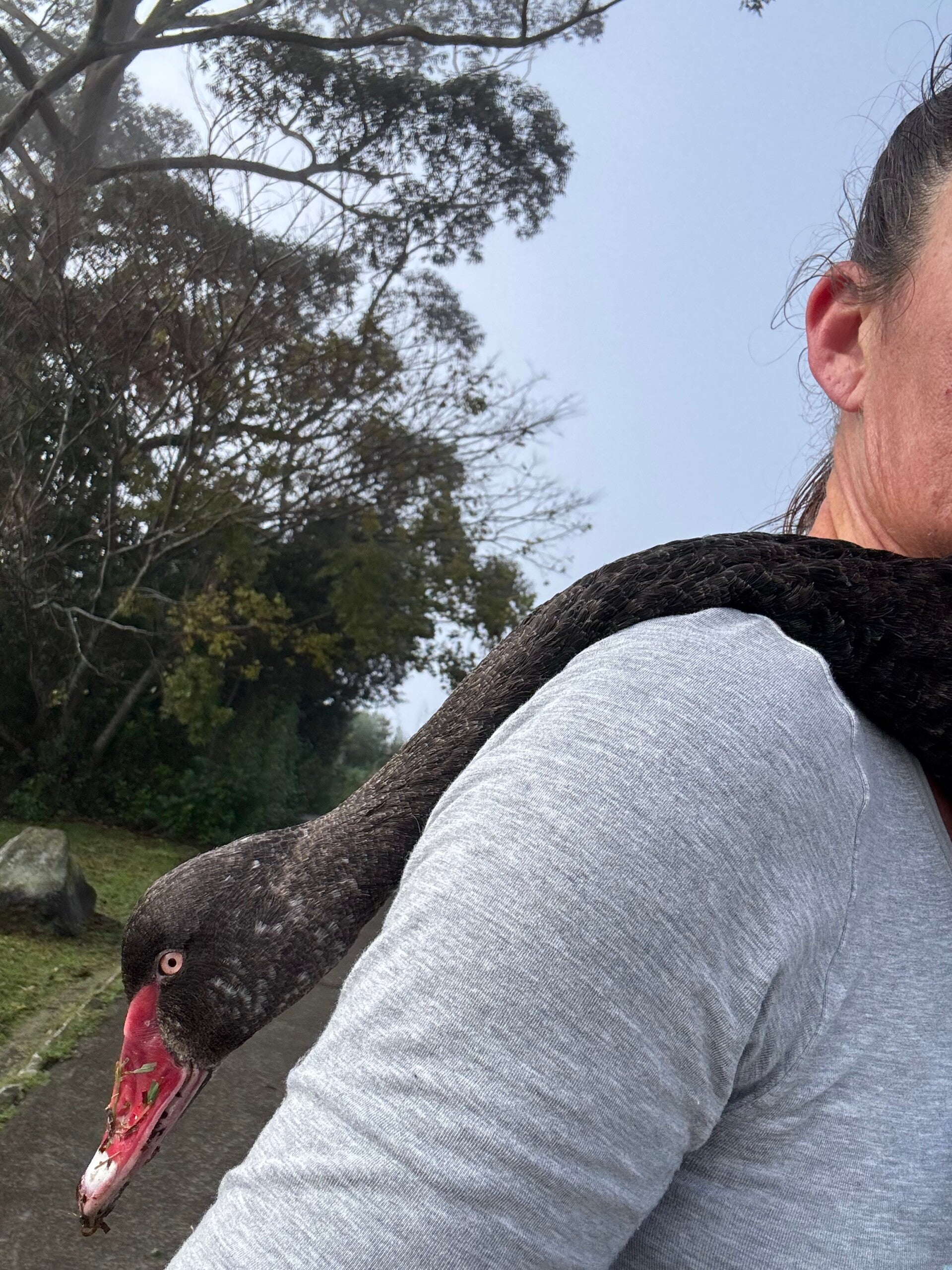
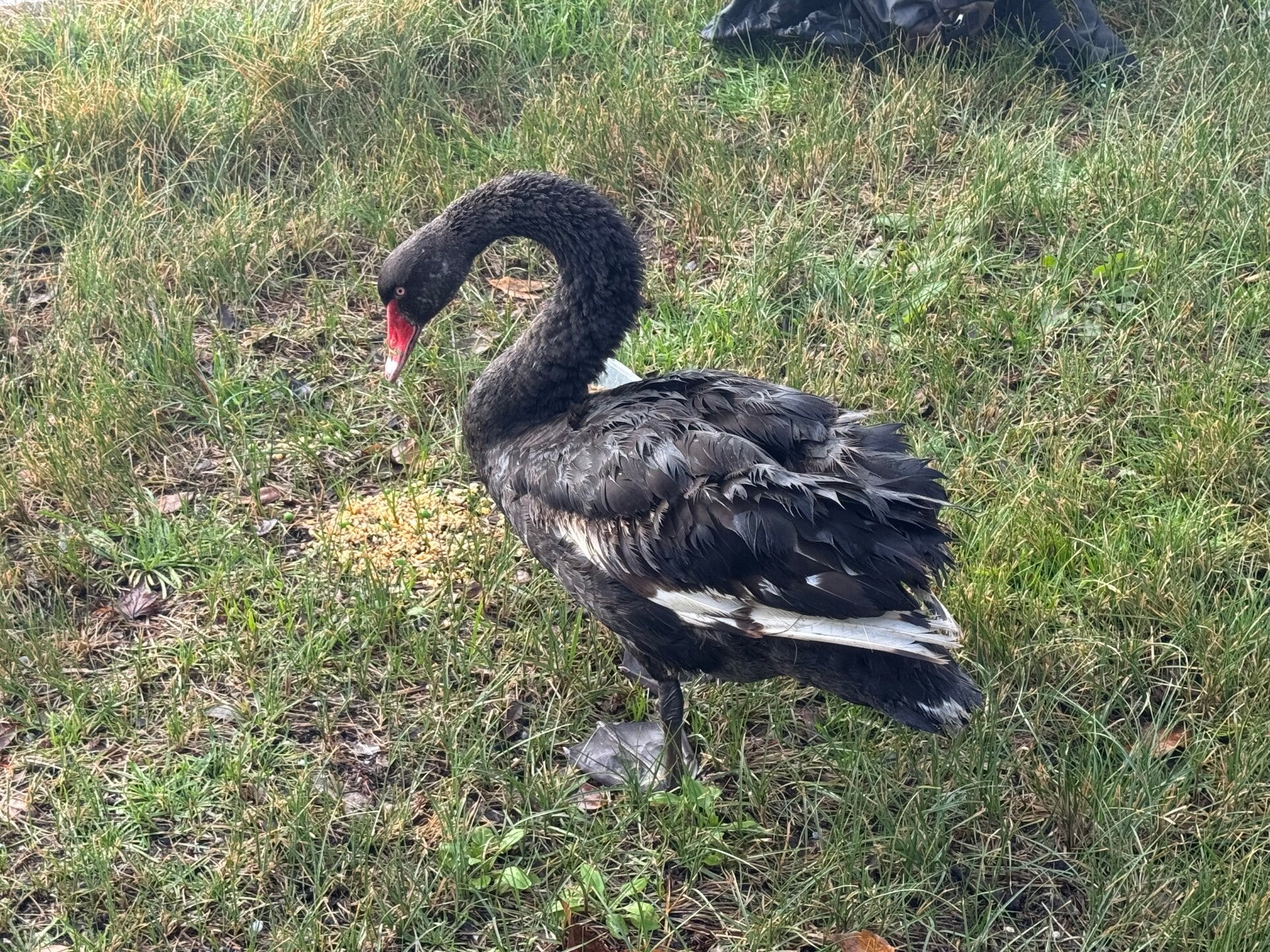
Scrabbles was approximately 4-5 months old when he was first sighted swimming alone in a tributary near the park which was accessible during high tide. Over a period of about 6 weeks, he remained under observation - coming in more and more frequently.
About 3 weeks in, we began to notice he was being accompanied by other swans - usually one older swan who stayed with him despite the greater risk to self it imposed, as it was where dogs frequently jumped in to swim. As the tide went out, the older swan would lead Scraggles back out to the pod in the open sea so as he wouldn't become stranded.
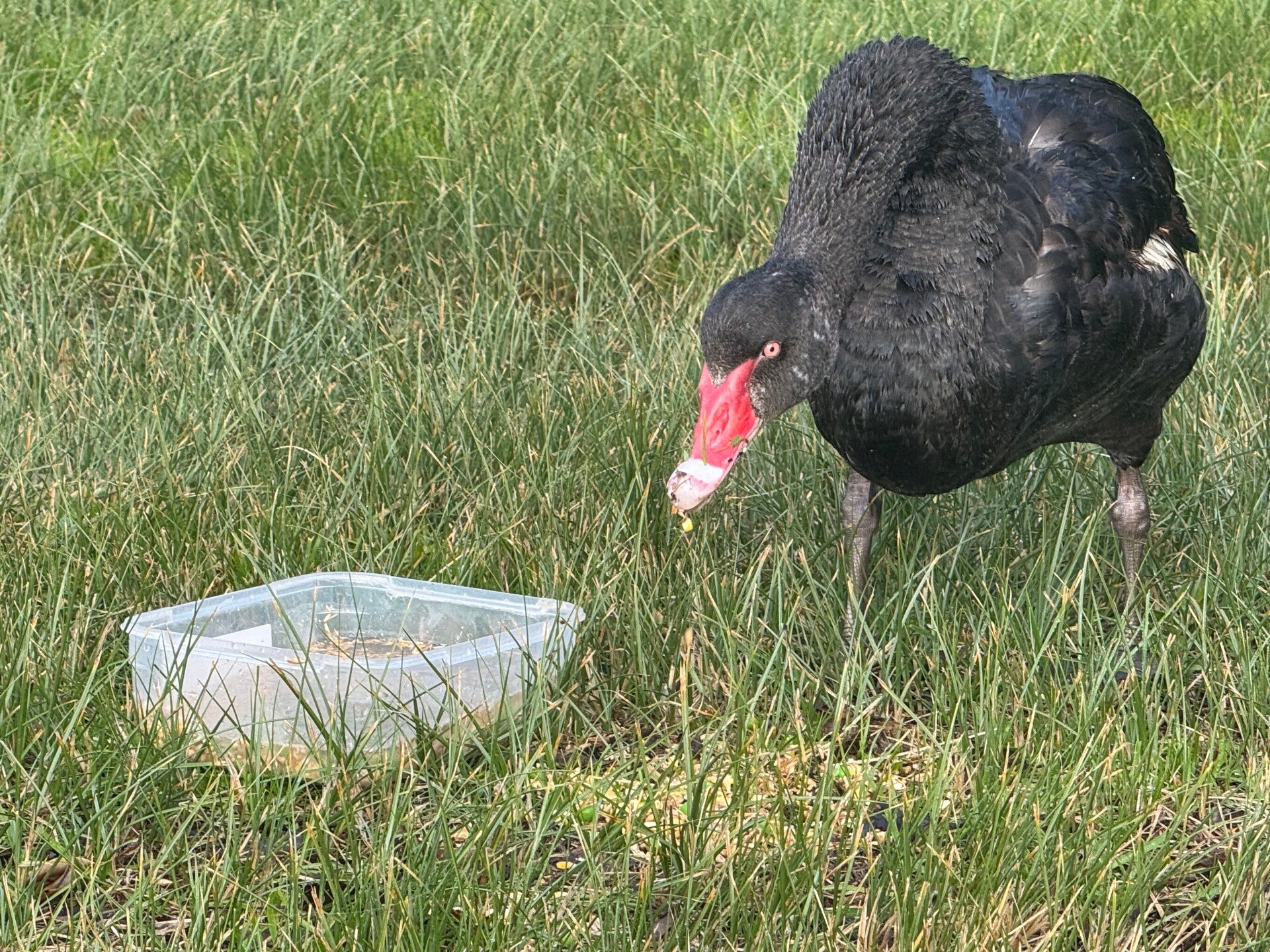
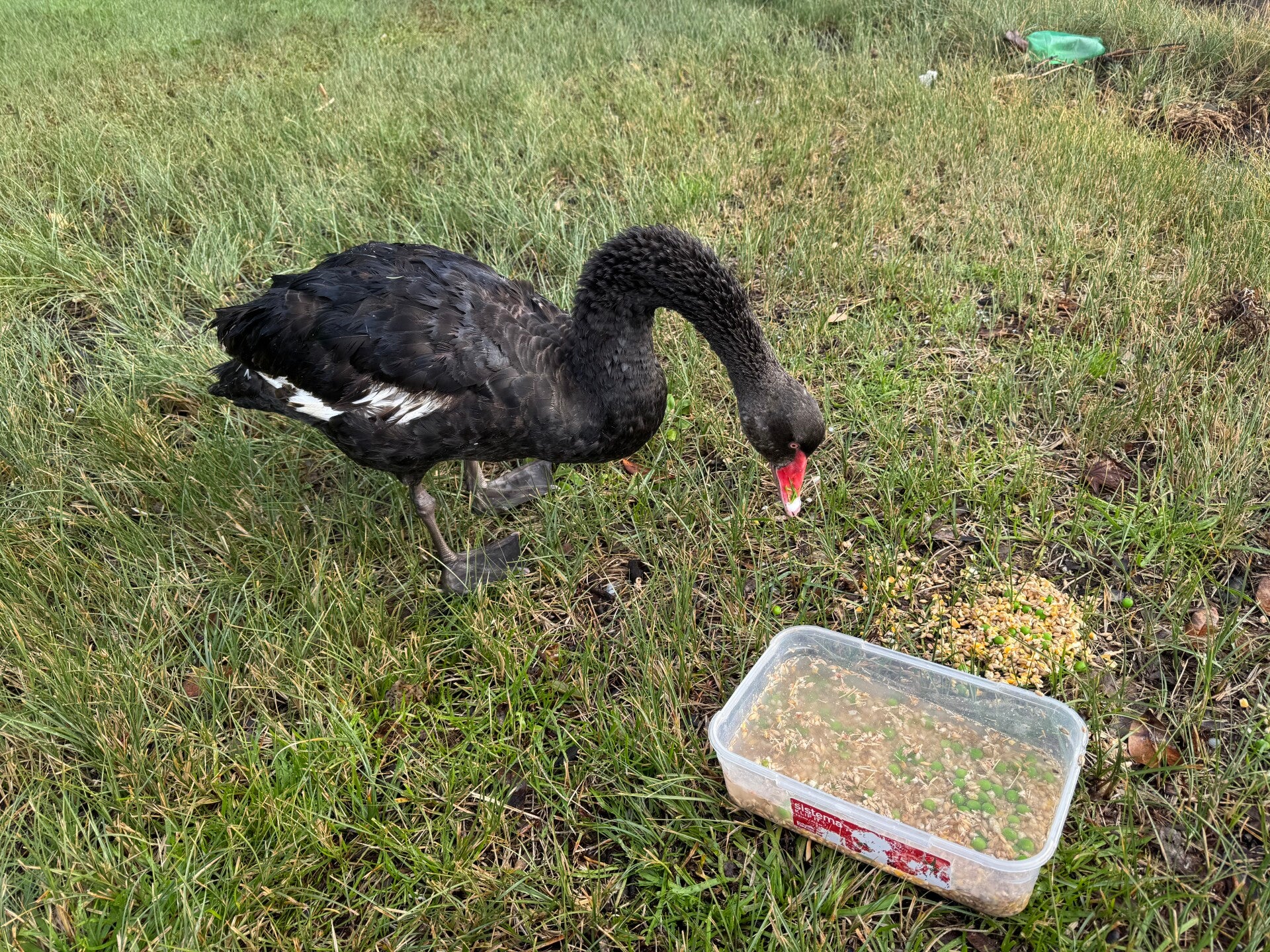
About 4 weeks in, these older wild swans began leading him near to where I was observing him. I slowly began placing some food at a distance, then moving away. The older swan would swim Scraggles up and much to my relief, he began to eat. Within a handful of visits he felt safe enough to swim straight up. It was clear that he was very small, and incredibly hungry. At one point, he had somehow exited up into the park in a very open and exposed place presumably searching for food or water. That day, I stayed with him as long as I could to protect him in case a dog came. There was no obvious exit path for him, and I still don't know how he got up to begin with, as he couldn't have flown.
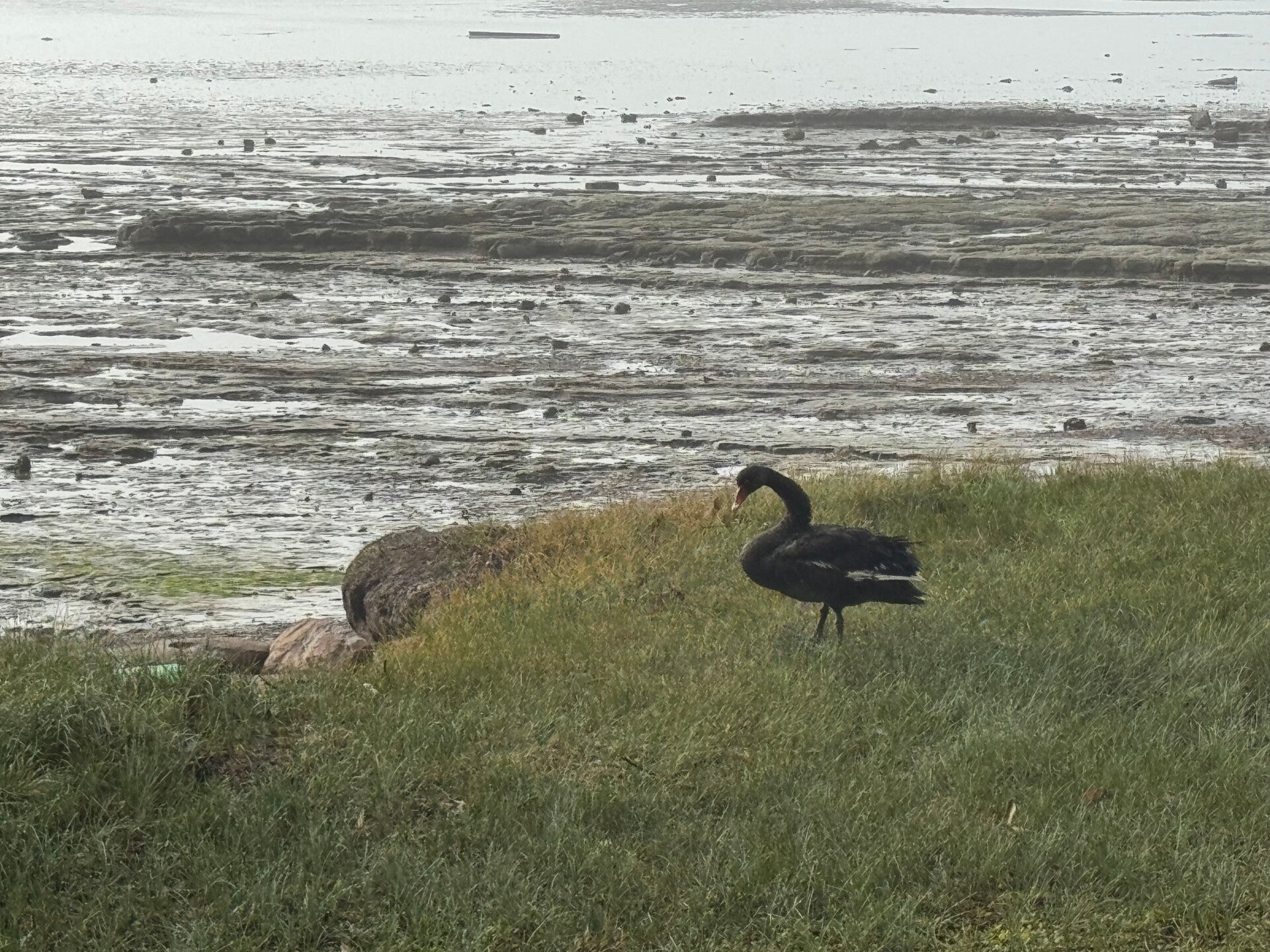
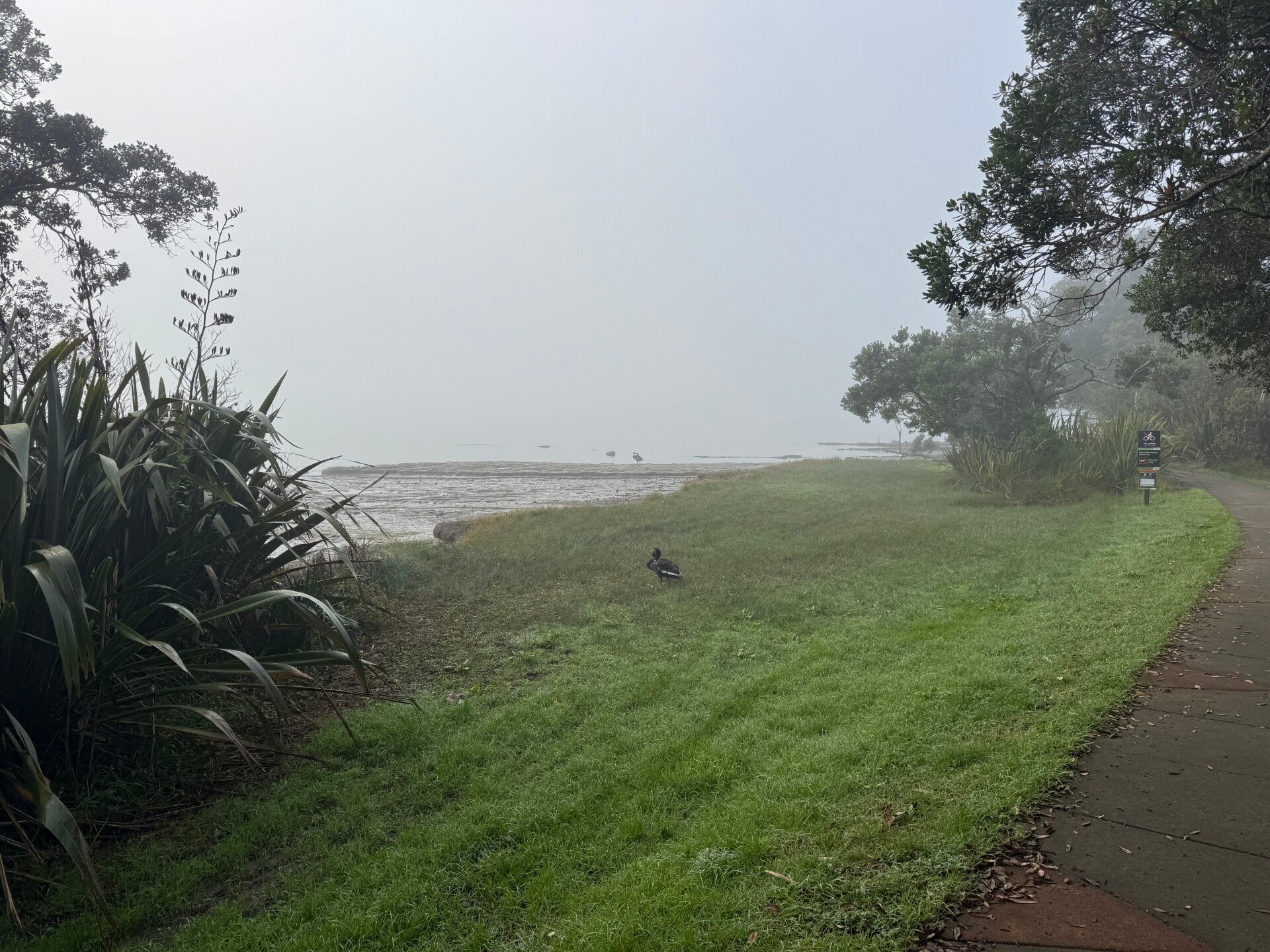
I was very relieved when I found him alive the next day at a little bay which has now become known as the 'triage bay'. This little area was where the wild pod thereafter brought him. It is a small strip of grass, which usually collects a little bit of rainwater in a shallow puddle. A lifeline when they are dehydrated and have no other access to freshwater. The strip of grass abuts the coastline providing an escape path away from dogs and predators, while also offering a little bit of shelter from the worst of the wind and ocean waves.
For about a week, Scraggles came to the triage bay supported by at least one or more older swans, who would be waiting nearby while he rested up on the grass bank. These older swans would act as lookouts for threats, with multiple call sounds ranging from social calls, to movement calls, to warning calls if was in danger and needed to get back into the water or move to a place of better protection within the rest of the pod.
It was here I found him one day, and noticed he was not acting as animatedly as he normally did. In fact, it was his lack of movement, that alerted me to the fact that something was not right. I sat near him for a few minutes, and put some water and food nearby. But he was completely disinterested and appeared lethargic. I put my hand on his body and immediately noted how cold he felt; as really bad sign that he was becoming hypothermic.
I raced home and grabbed my kit, and found him exactly where I had left him on my return. The tide was beginning to go out and the rest of the pod were beginning to make their move away from the shoreline. His surrogates remained close by. I swaddled him in a towel and held him to me for body heat and walked him out of Tahuna. I placed him in a quiet place, on towels with heat packs underneath, to try and get his body temperature back up while I called the emergency vets. That afternoon I was able to get him seen and he was administered fluids and nutrients to stabilise him and try and turn the tide.
Overnight I observed him and ensured he was warm, safe and able to rest. By morning, he was showing signs of greater animation again and was back on his feet and more responsive. It looked promising and a plan was formed to bring him back to the wild pod the following day to give him the best chance possible with the least amount of stress and disruption. However, mid afternoon he suddenly began to show worrying signs of decline. I put him straight into the car and raced him back to the emergency vets - about 40 minutes drive across town. The team were waiting but sadly, he was pronounced dead shortly after arrival. Based on the exam, and the signs I had reported, it was determined that he had gone into organ failure; an almost certain result of severe dehydration and starvation. The efforts of the previous day too late to reverse the damage that had already been done.
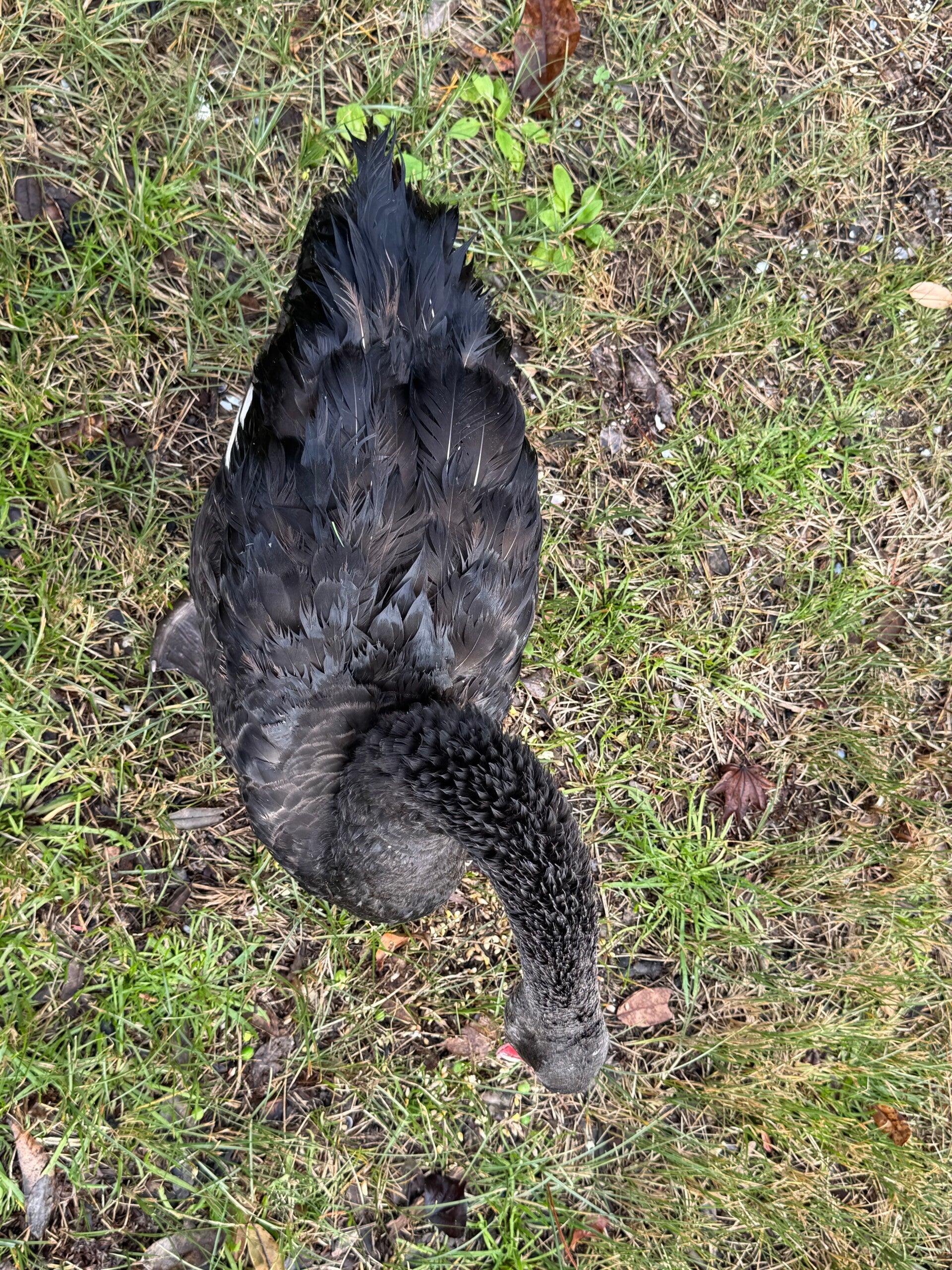
Over the following two week period, two other babies would be found dead within 50 metres of the triage bay. All aged about 5-9 months old; all with very low body scores indicative of the same cause - starvation and almost certain corresponding dehydration levels.
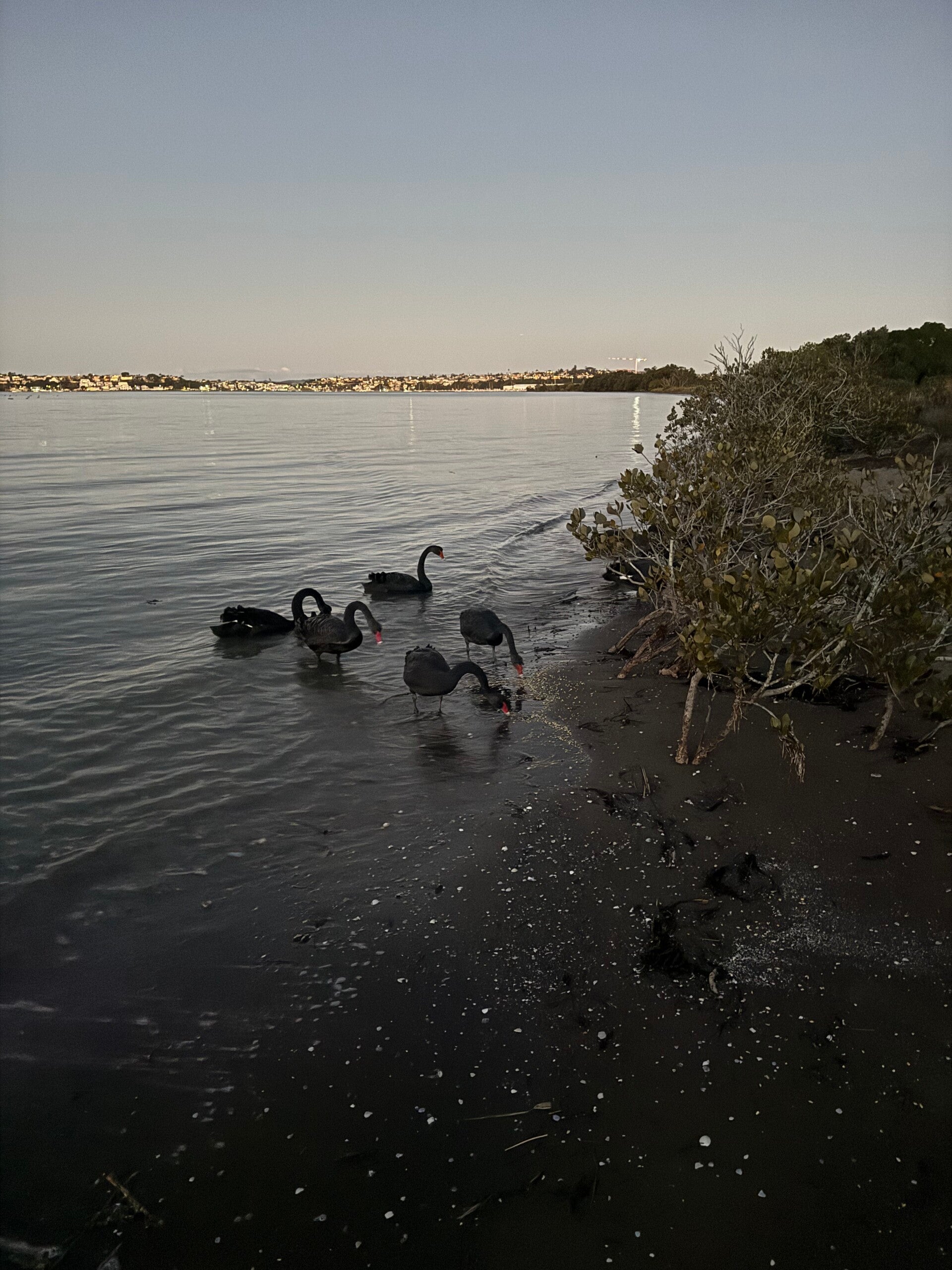
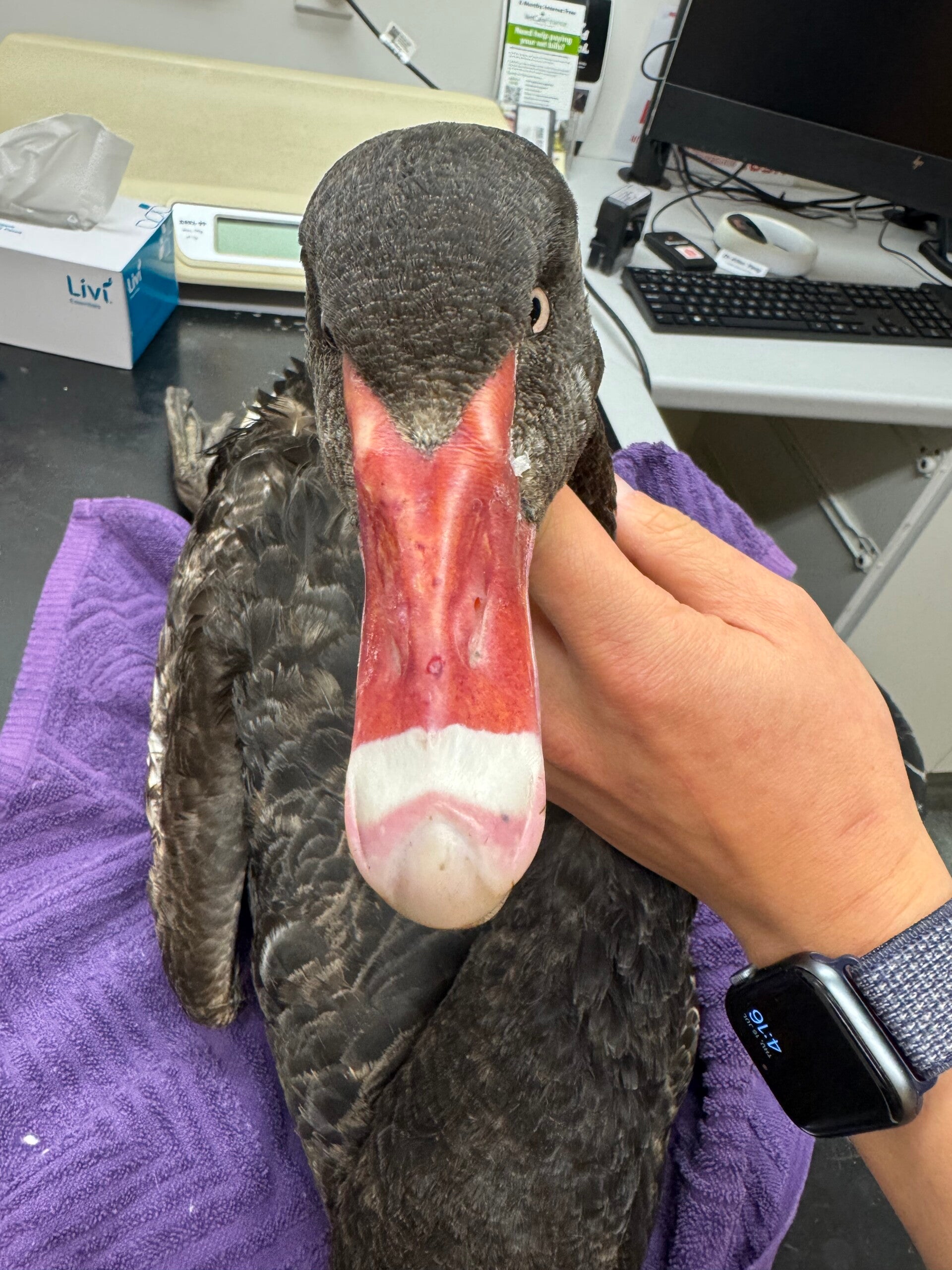
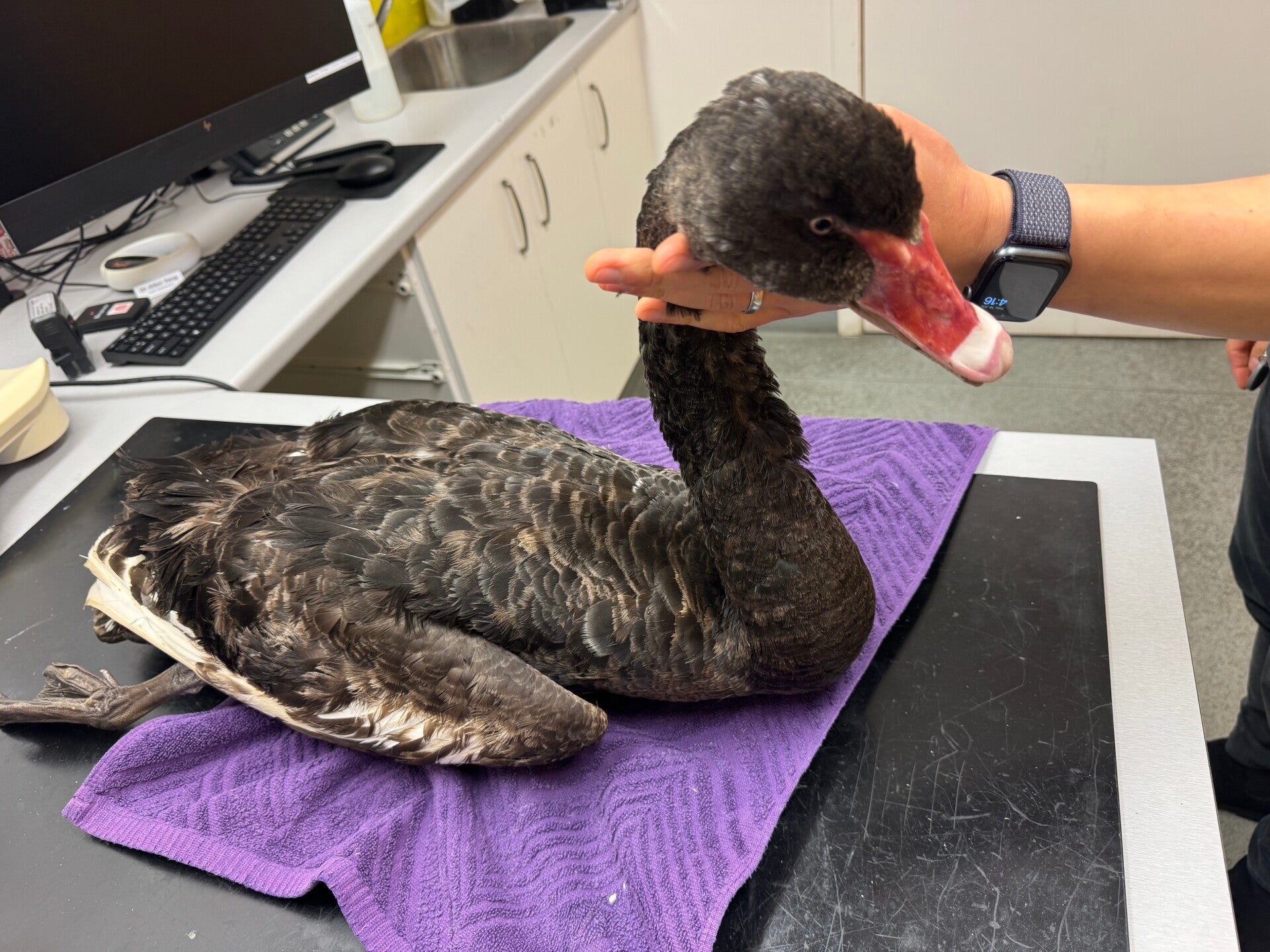
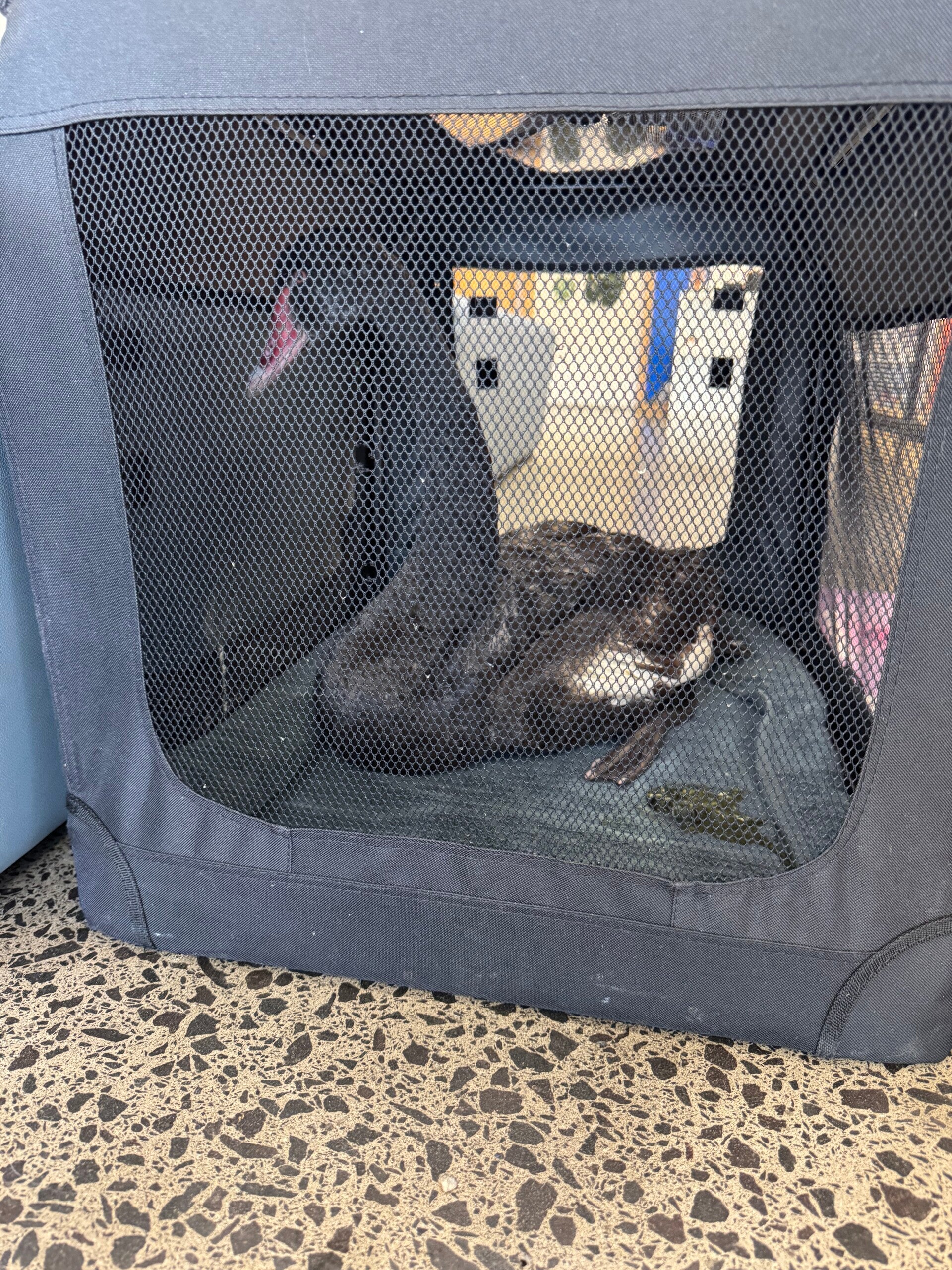
Meet Banda (2026)
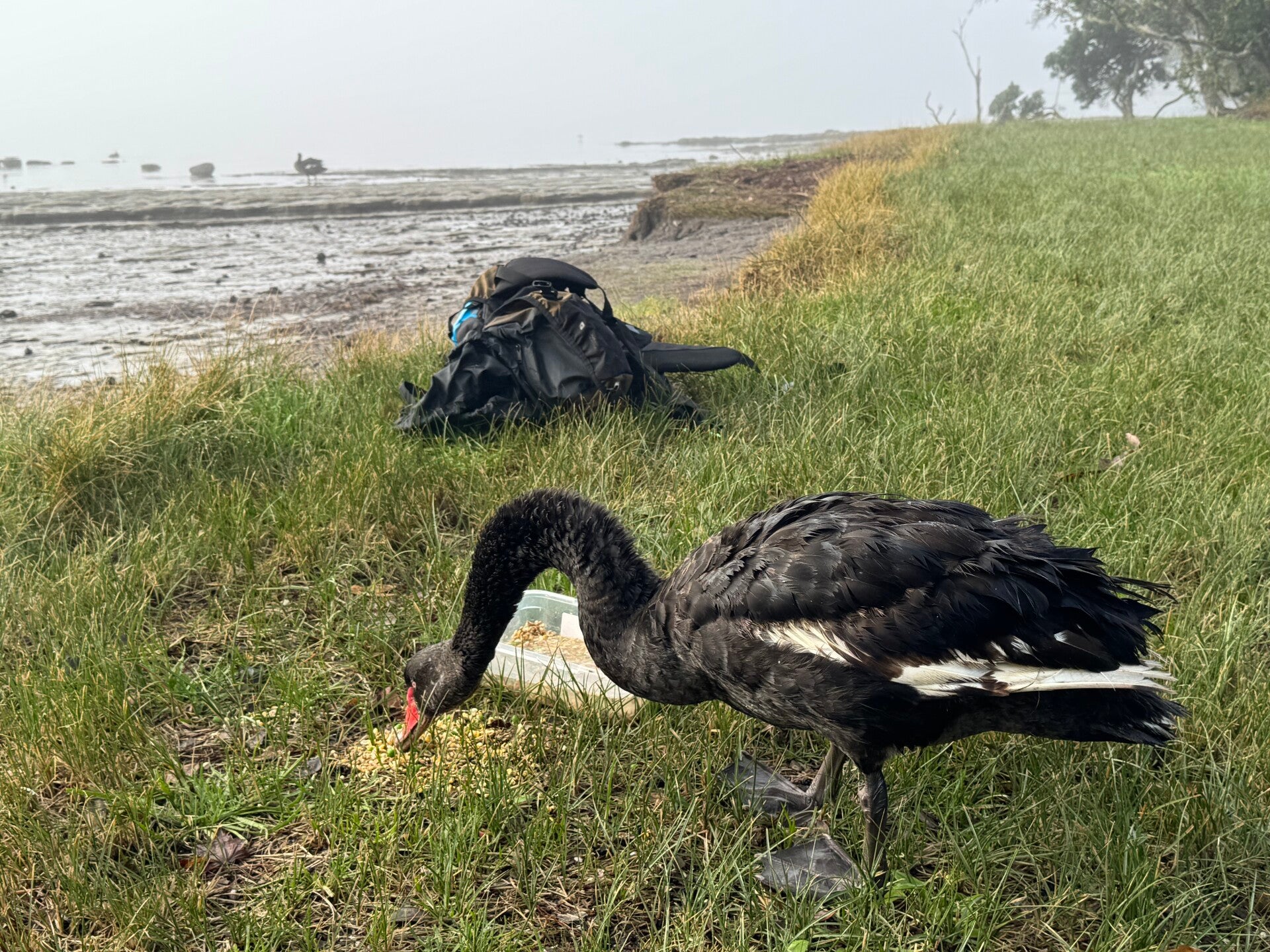
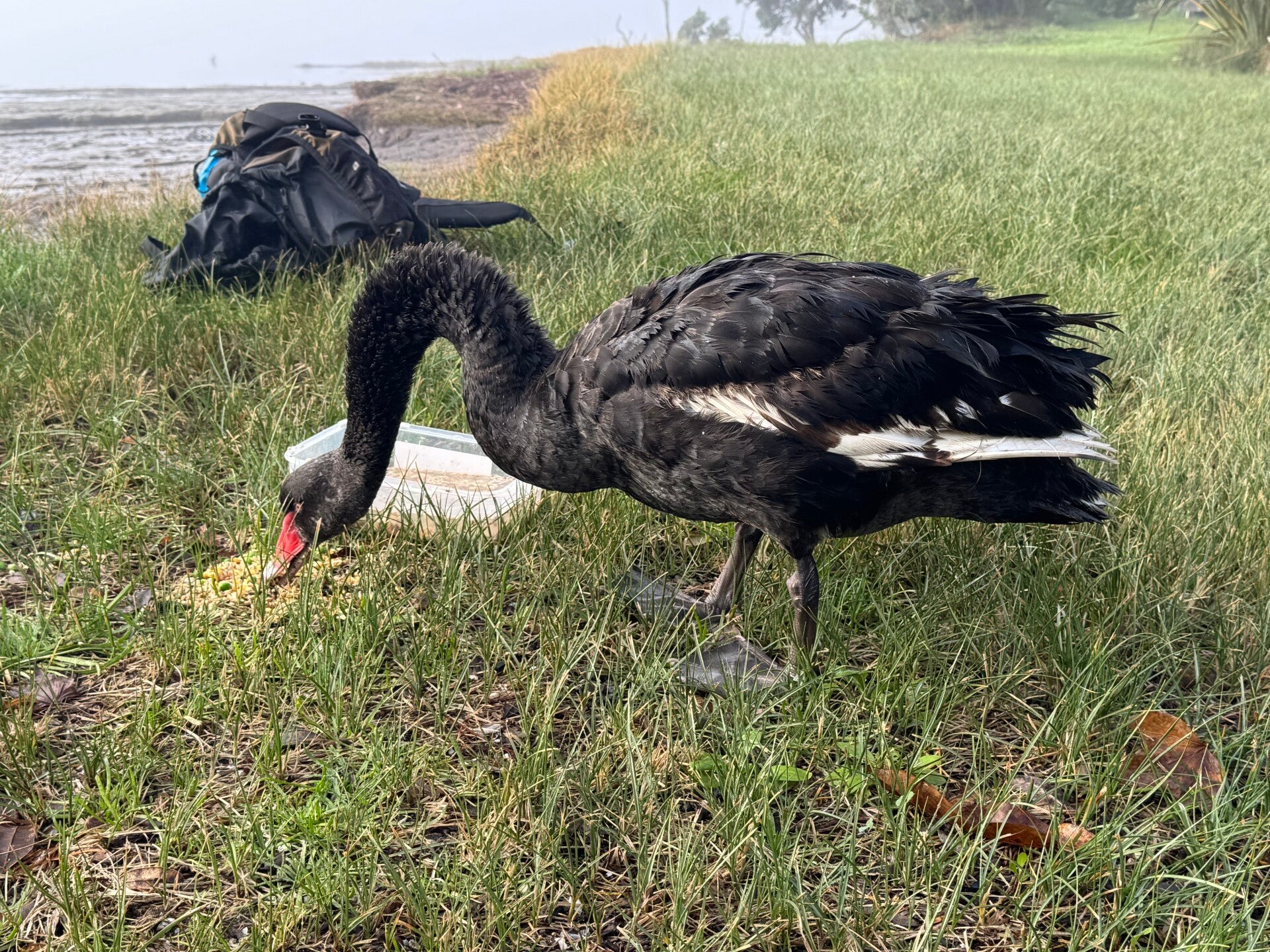
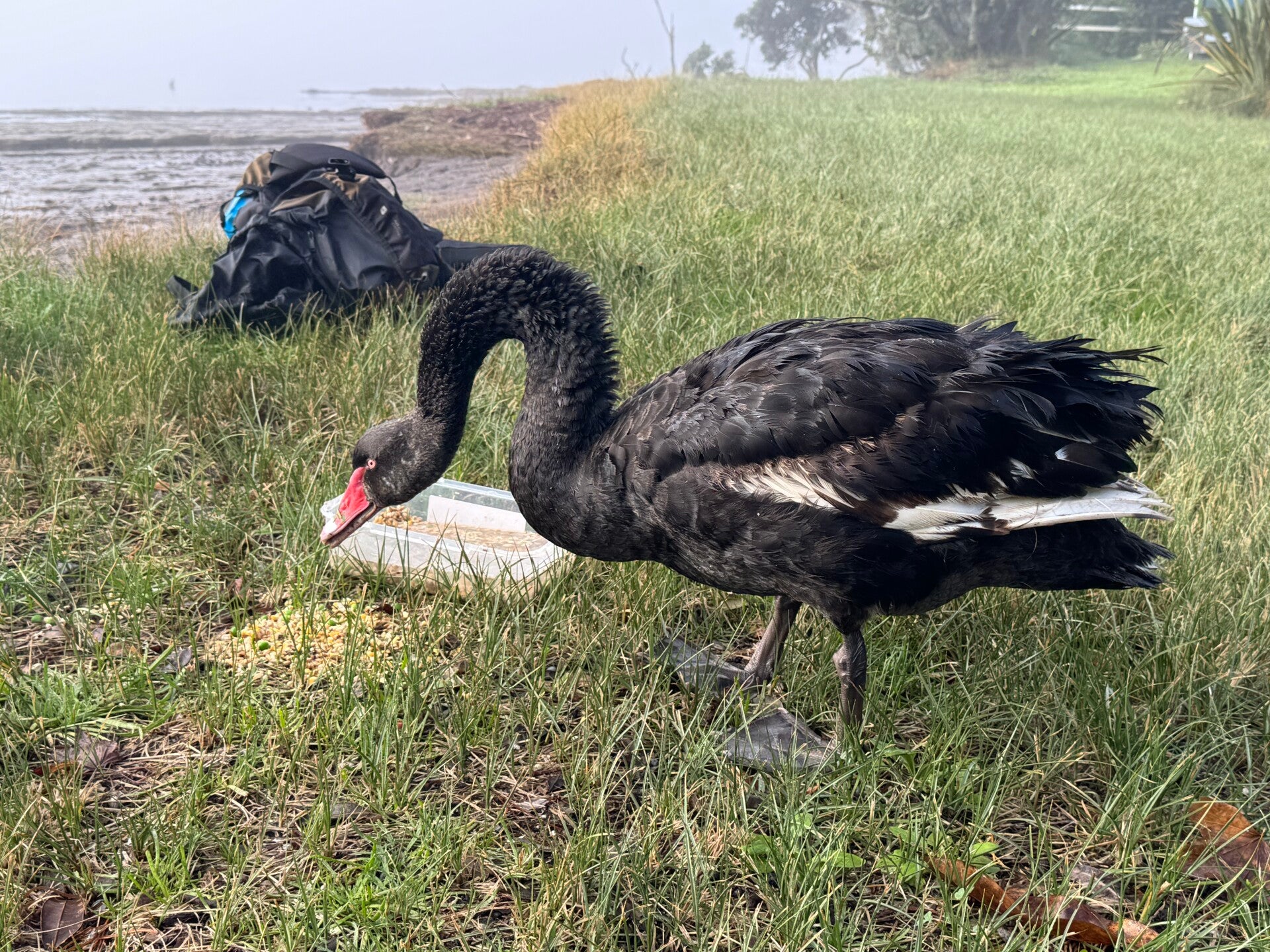
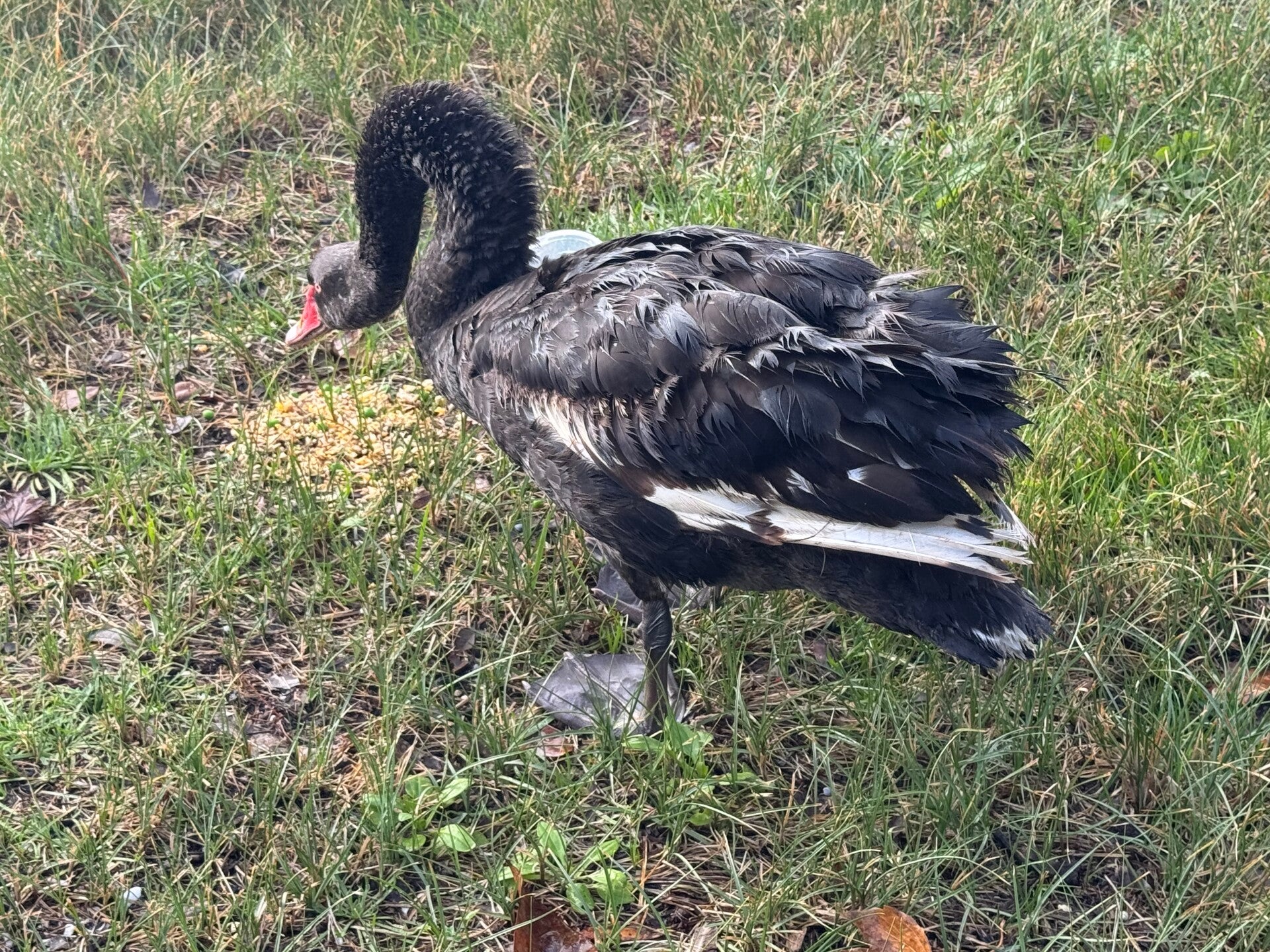
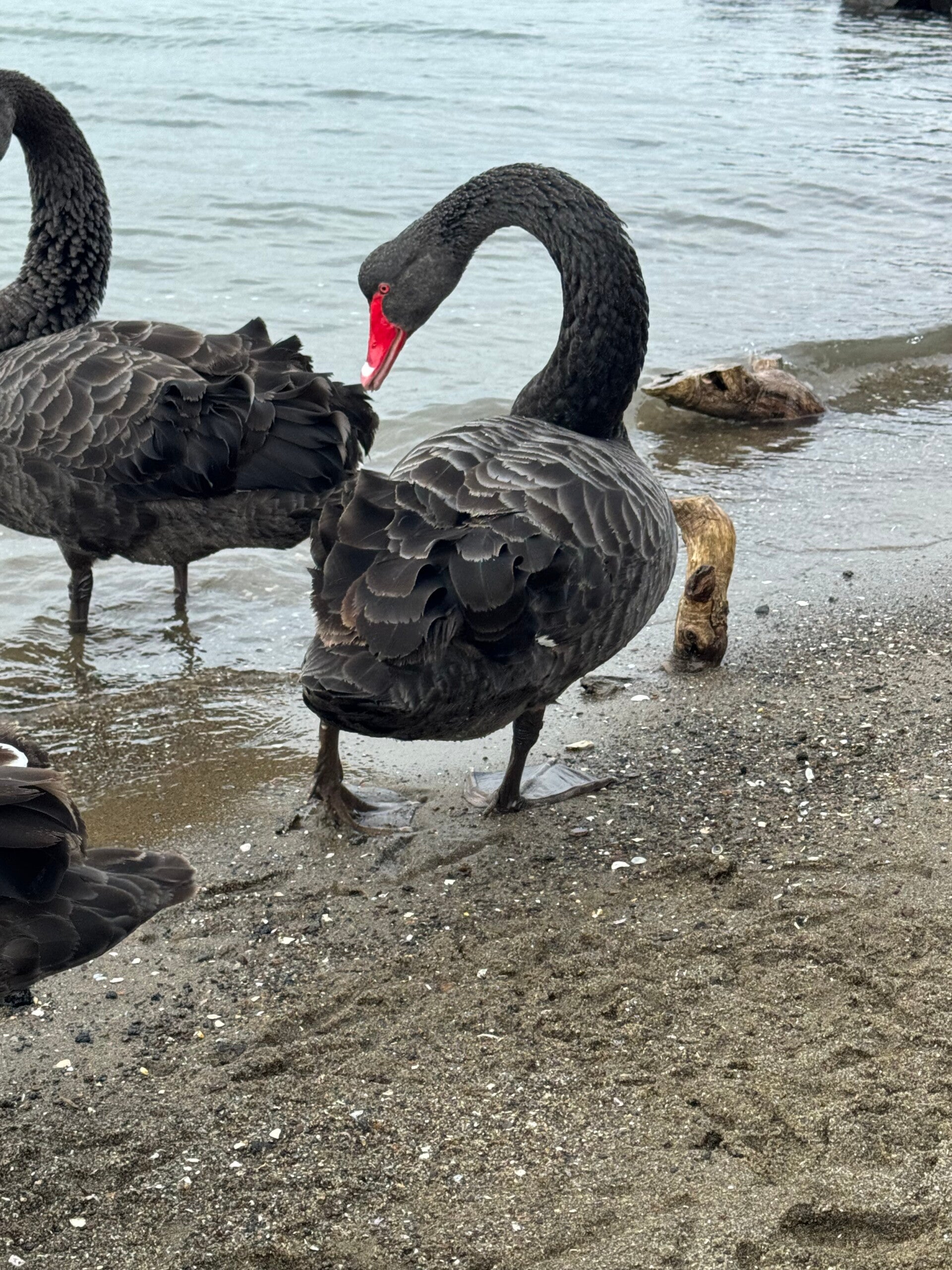
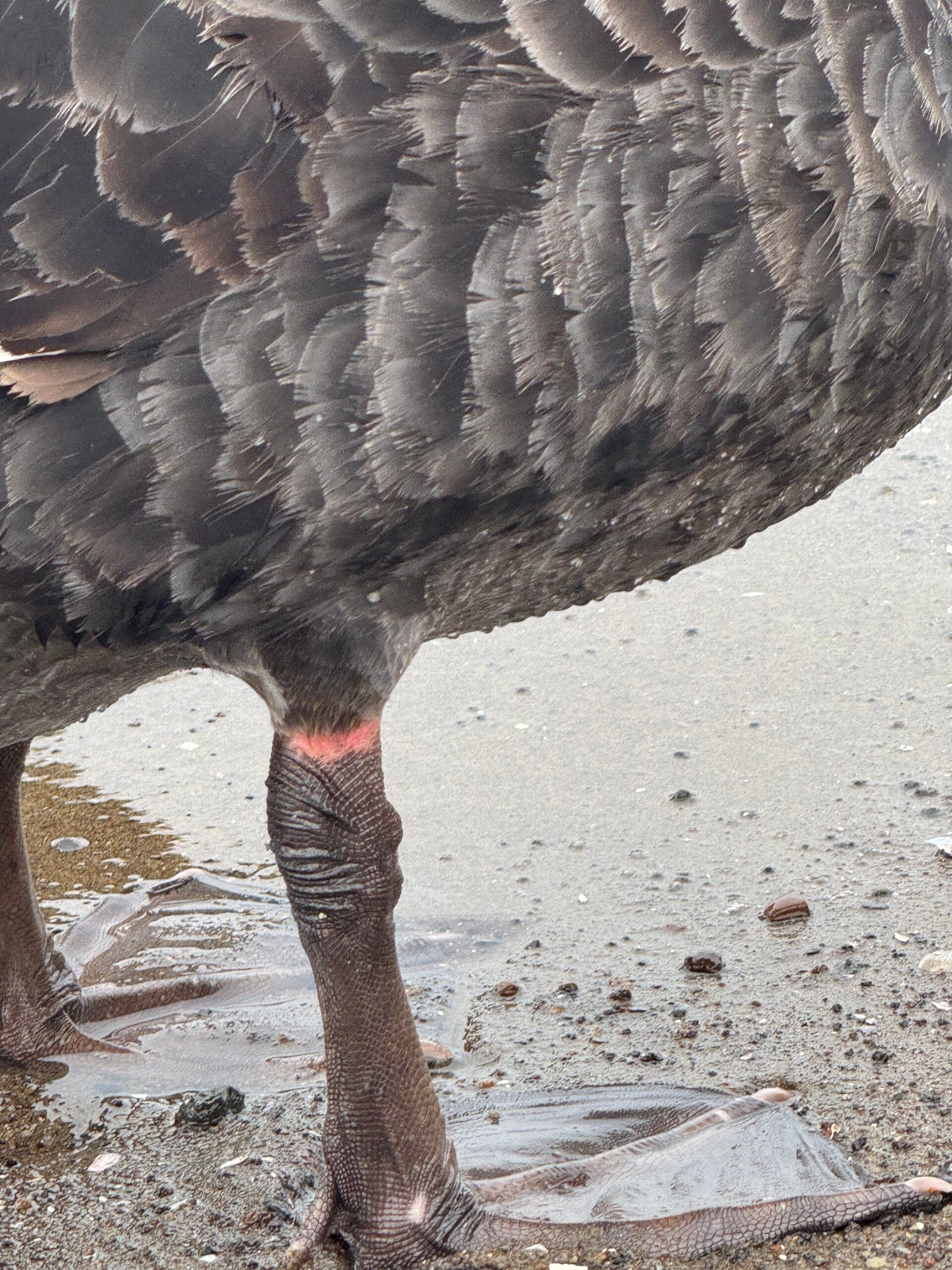
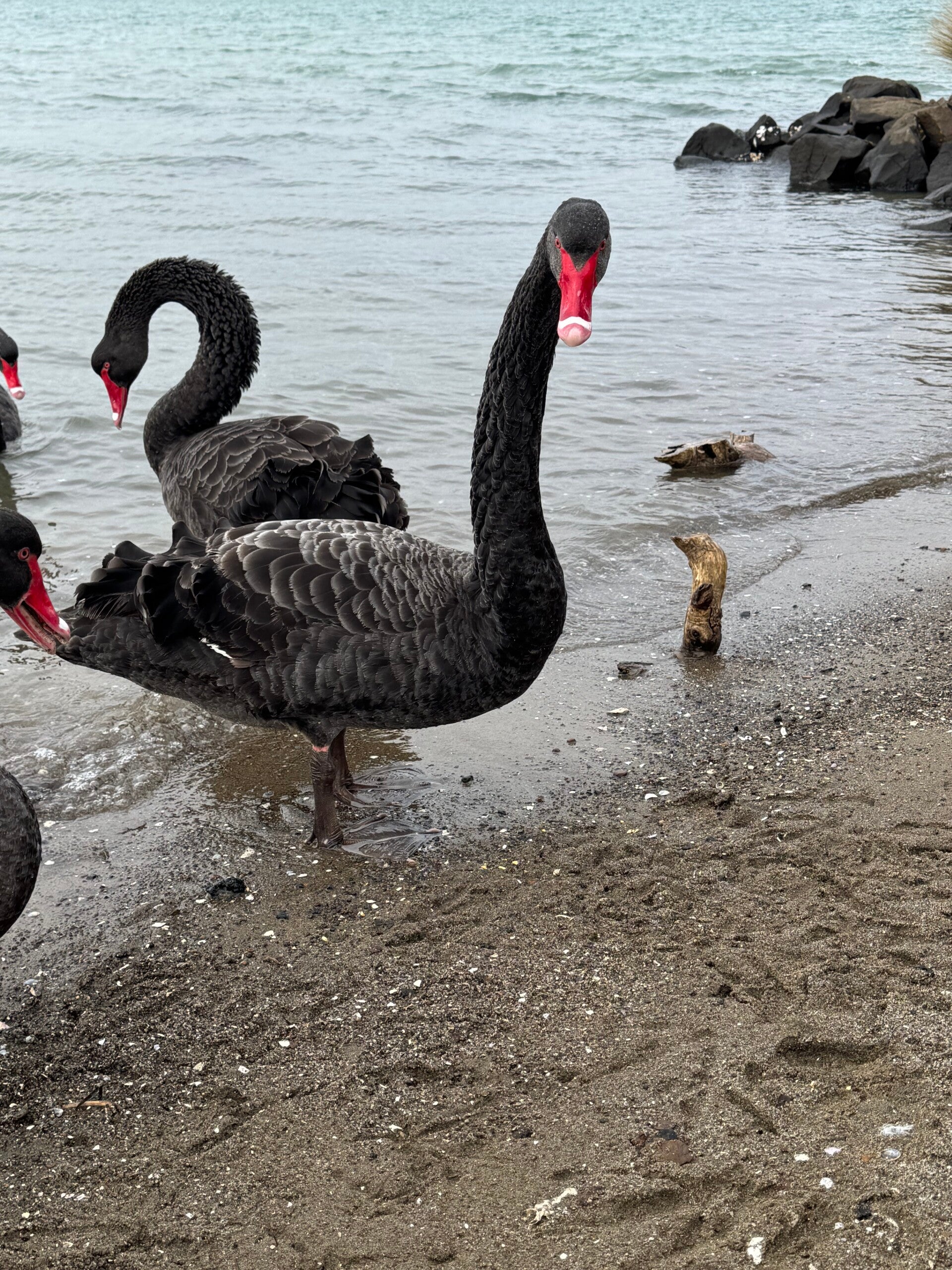
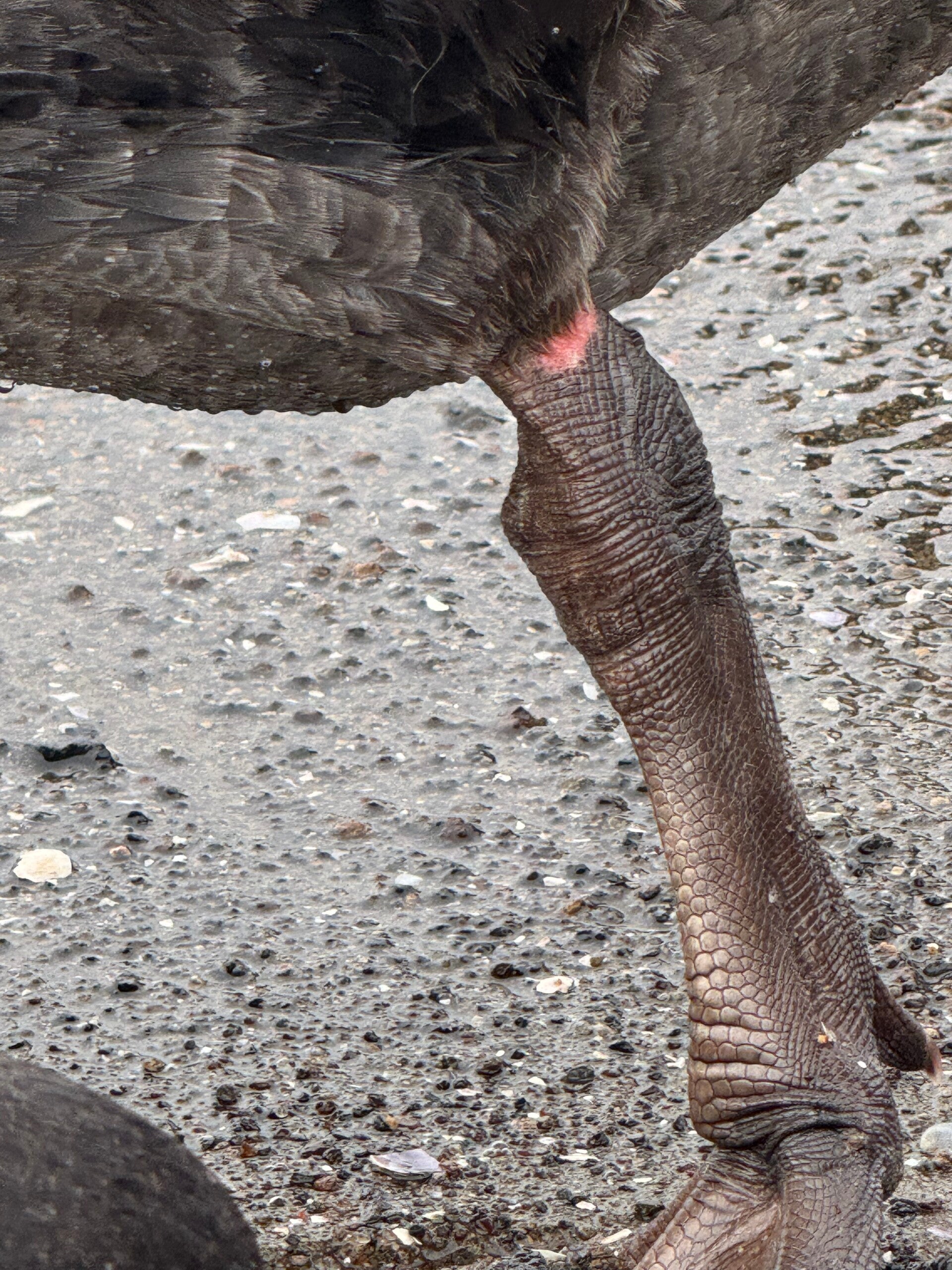
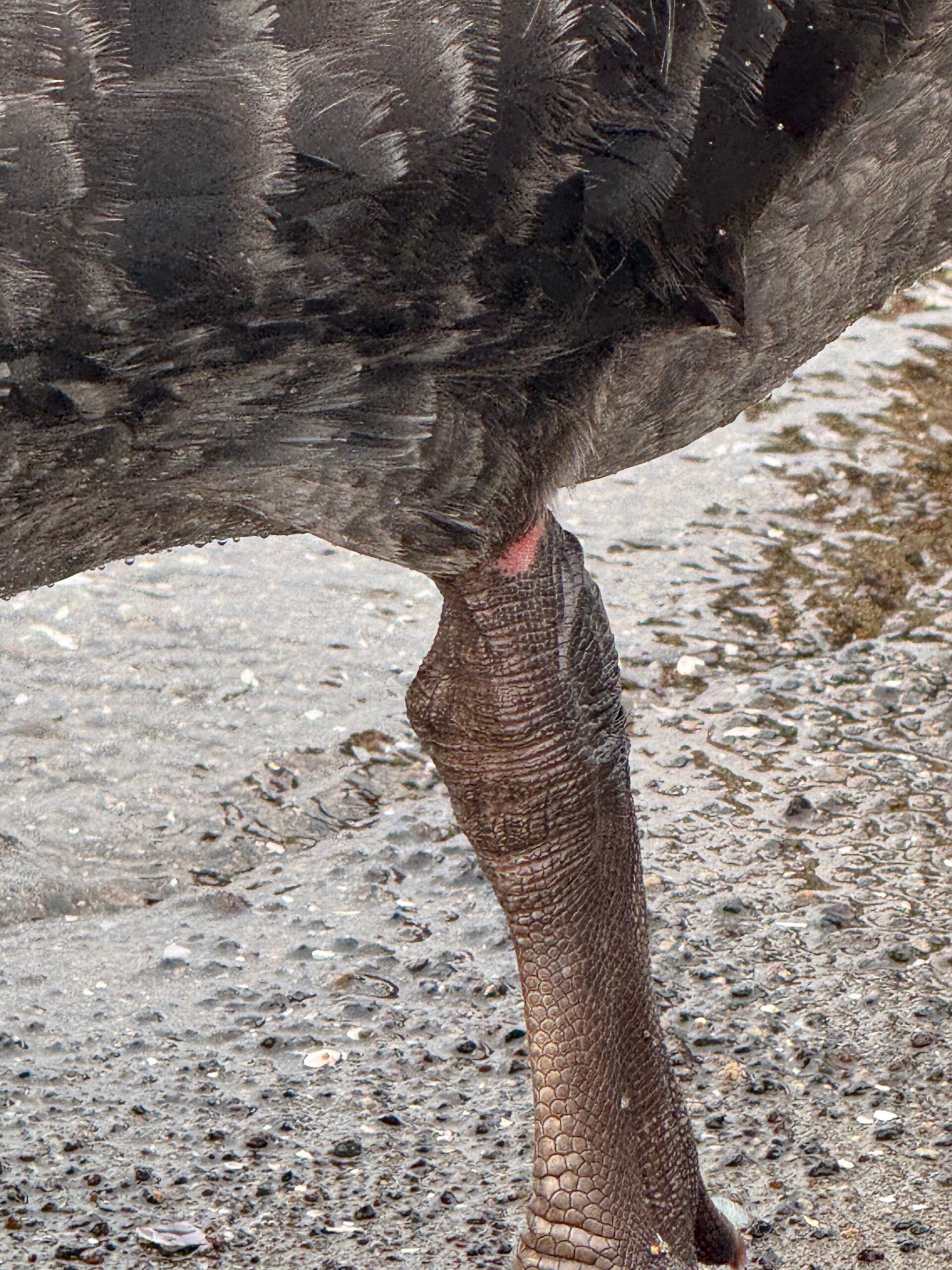
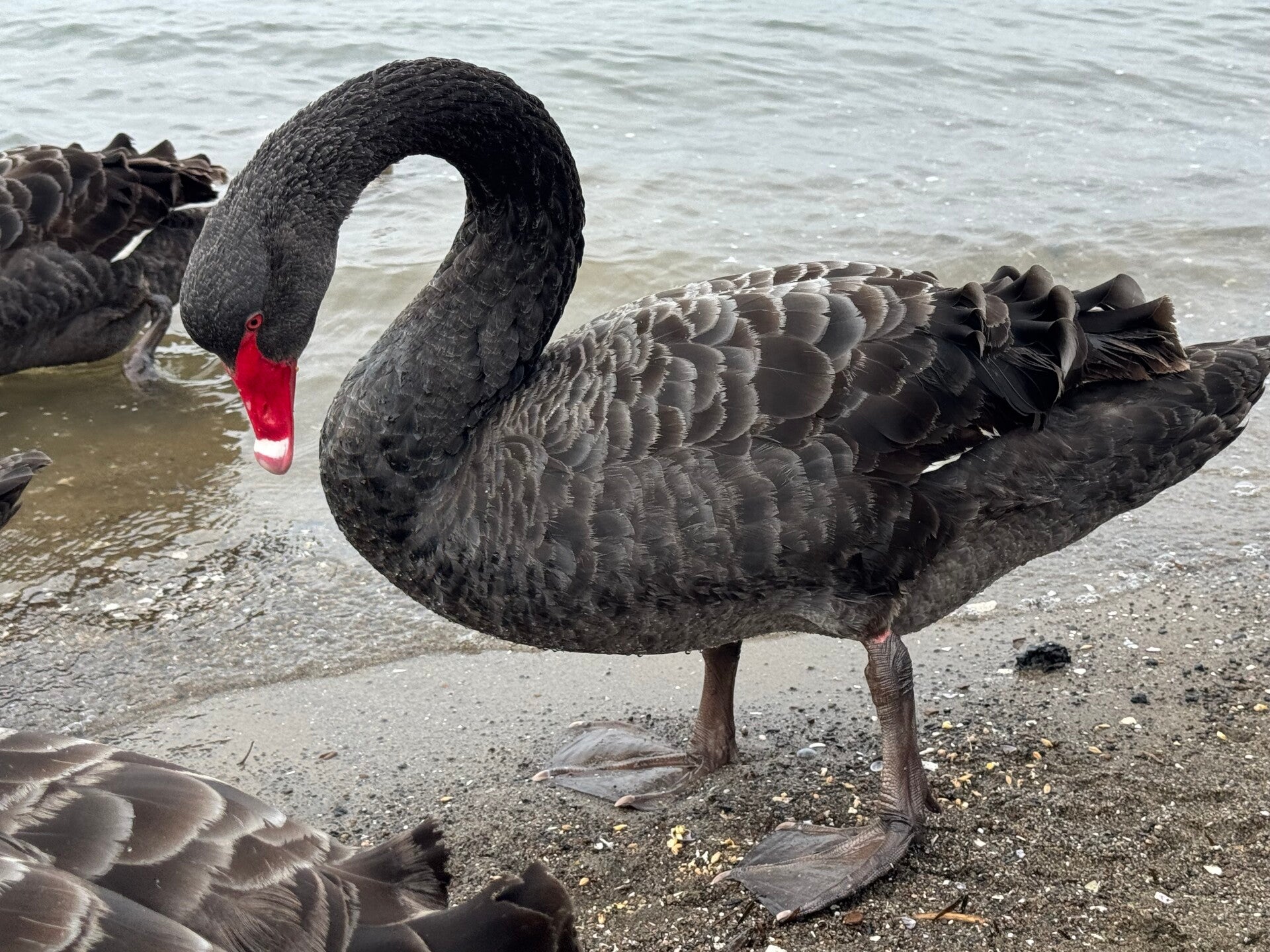
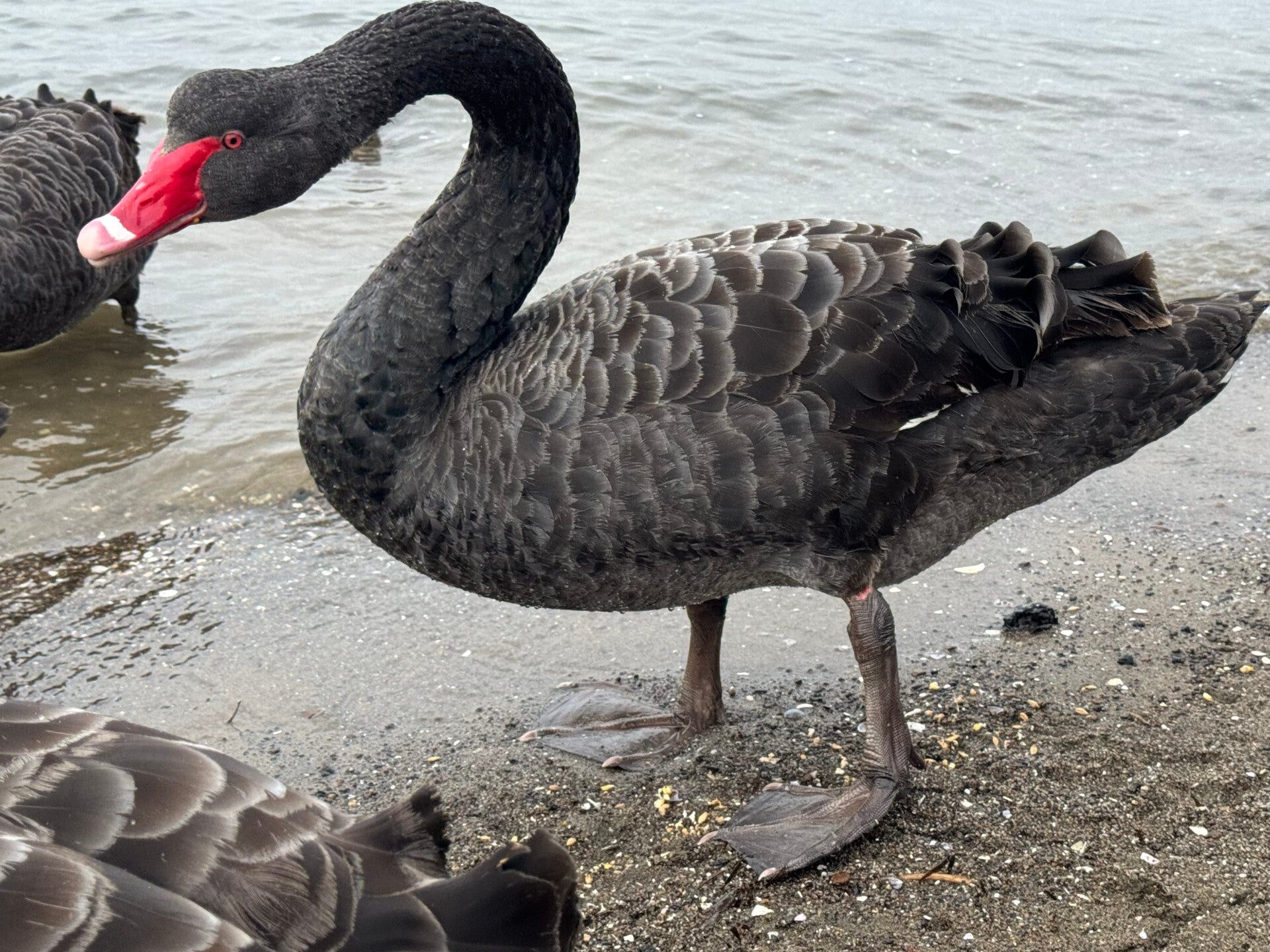
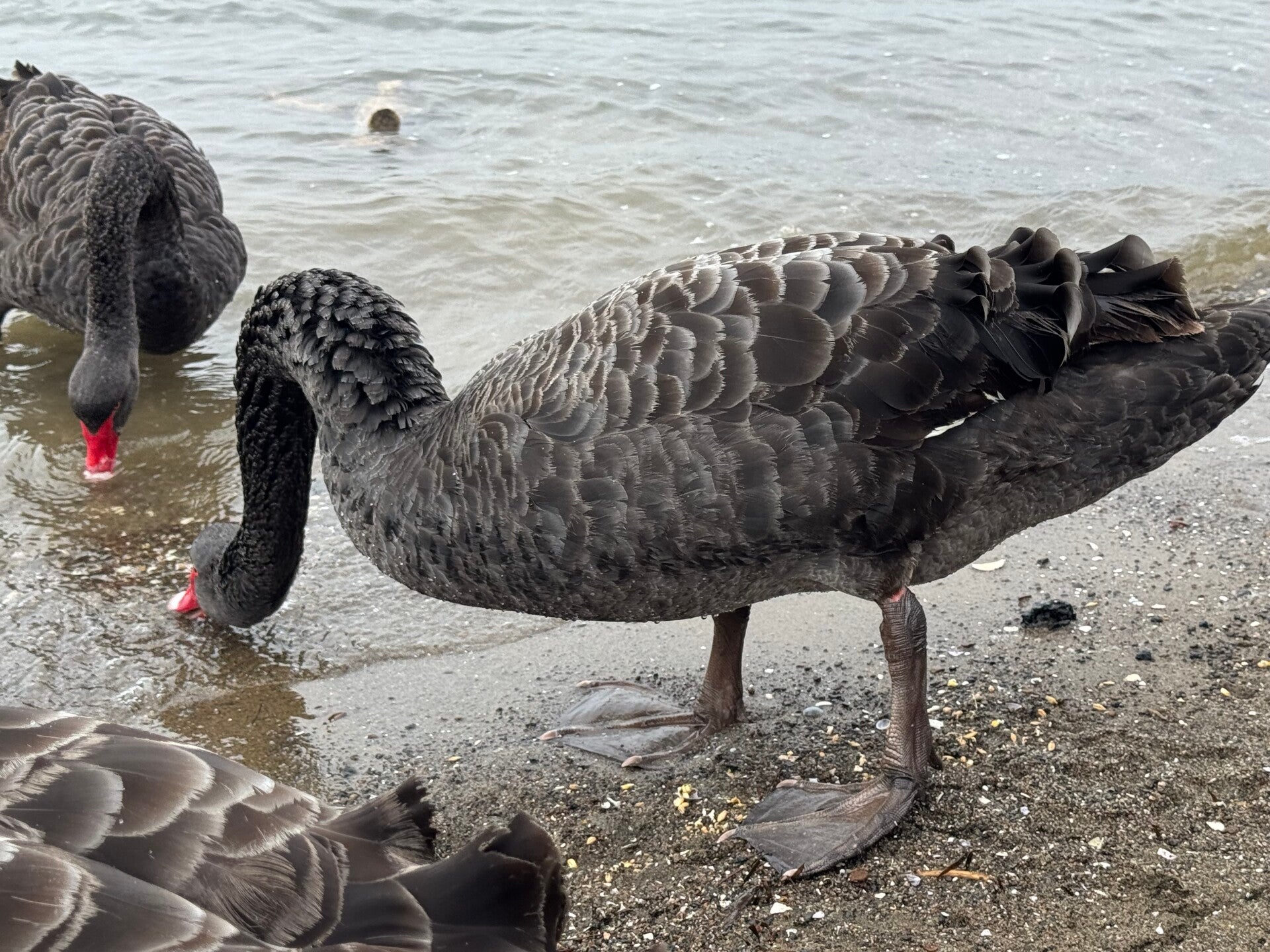
One day, this beautiful juvenile arrived along the coast by the Point swans. Overall, he looked fairly healthy, with good feather condition, good body and muscle condition, and easily integrated with the rest of the pod. However, he was very distinguishable by the angry red wounds around the top of each of his legs. The following day I would also observe two large holes in the webbing of one of his feet. Together this presentation appeared indicative of injuries consistent with fishing.
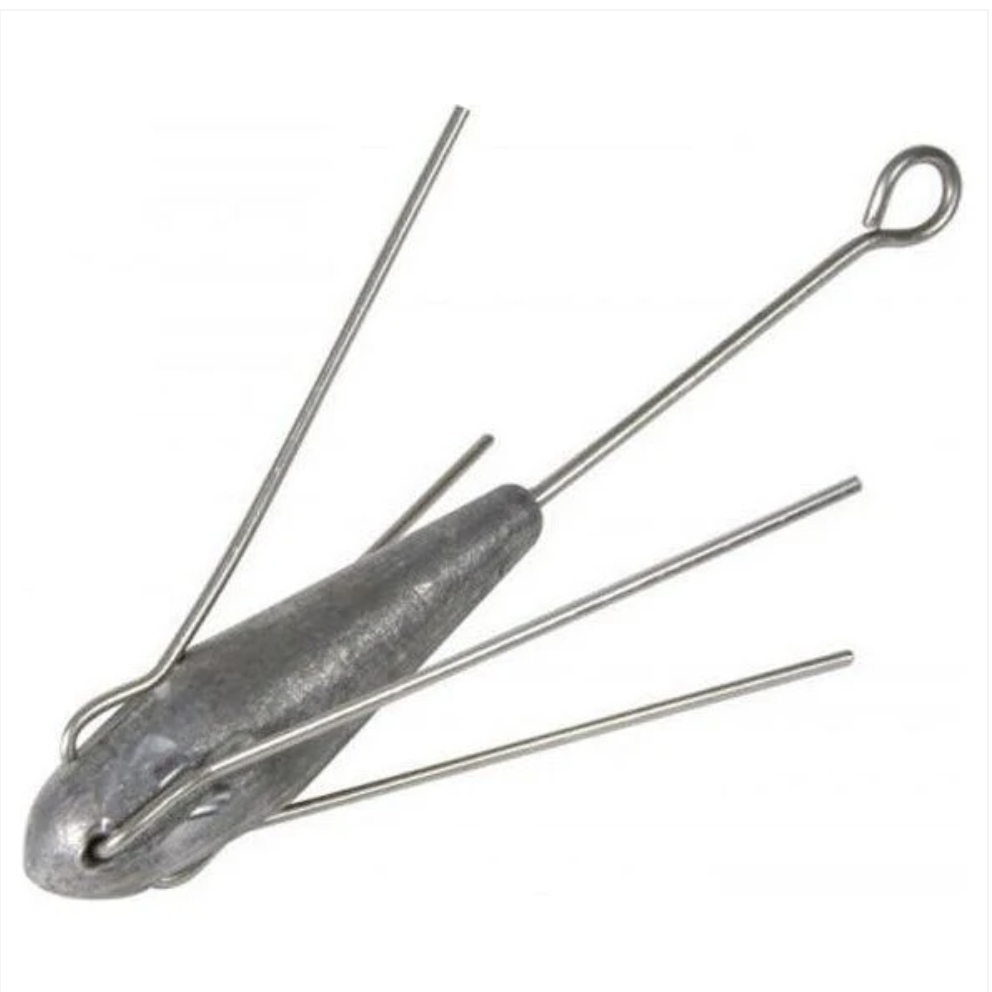
part of what I have always done is to clean up the areas where the swans frequent of rubbish, hazards, etc. At the Point, and along the adjacent coast, there are always hooks, sinkers and fishing lines left behind, usually where they have become caught in the rocks, and fishermen have simply cut the lines and left them. One type of sinker I had found repeatedly near where Banda arrived is the sand sinker; a heavy weight to which is attached multiple long metal spikes, which protrude upwards out of the sand. For a swan, it is effectively a four-tined fork which punctures through their webbing should they stand on it.
If one is to imagine a non-visible fishing line caught in the crevice of a rock at some distance from where it is attached to its sand sinker, it is not hard to see how a swan could become quickly entangled. The two bands of raw, red skin around the top of both legs showing the signs of fishing line becoming increasingly tight and embedded through the struggle to get free of this entanglement.
Banda was also exhibiting distress shaking in his legs. I have observed this under different conditions - poisoning, proximity distress, post-exertional distress, immune distress - so began daily observations to determine whether it was consistent or transient in nature.
Her the following weeks, Banda brought himself in with some of the others in the pod and was notably hungry and thirsty, which is expected especially in swans who are injured and require a far greater caloric excess in order to heal from sickness or injury. The shaking remained relatively consistent over the first week, however quickly started subsiding in line with the improvement in his wounds. As the red bands slowly became a softer pink, the shaking ceased.
Banda has remained a semi-regular visitor over the past few months. He will come for several days in a row with that same initial voracious hunger, and then happily stay out with the pod for many more days without need for supplementation. Due to his obvious bands, he is happily fairly easy for me to spot when he is out of the water or close to shore.
Banda remained on the road to recovery and health until around a month ago, when I was prevented from carrying out my daily monitoring and presence at Tahuna. Several weeks passed of intermittent visits only. By the time I found Banda again, he had moved to the pod nearest the triage bay, and his leg wounds had again become red and the leg tremors had resumed.
Meet Beau (2025)
Beau is an incredibly special boy who is very near and dear to my heart. To know how special he is, one must first know how he came to arrive in the life of the Swoose family.
Up until April 2025, there lived a very happy pond-living family made up of two black swans - Titan and Ma - and a brood of orphaned geese. Over the years I have heard many versions of how the Swoose family came to be, and when - but there is a common thread that is consistently present.
A small flock of geese were translocated from Western Springs Park - for arguments sake we will say this happened 8-10 years ago. Some of the geese upped and left, and then sometime thereafter there was a botulism outbreak that devastatingly killed many of those that were left. Left behind were 5-6 little goslings, now orphaned, unable to survive on their own and incredibly vulnerable.
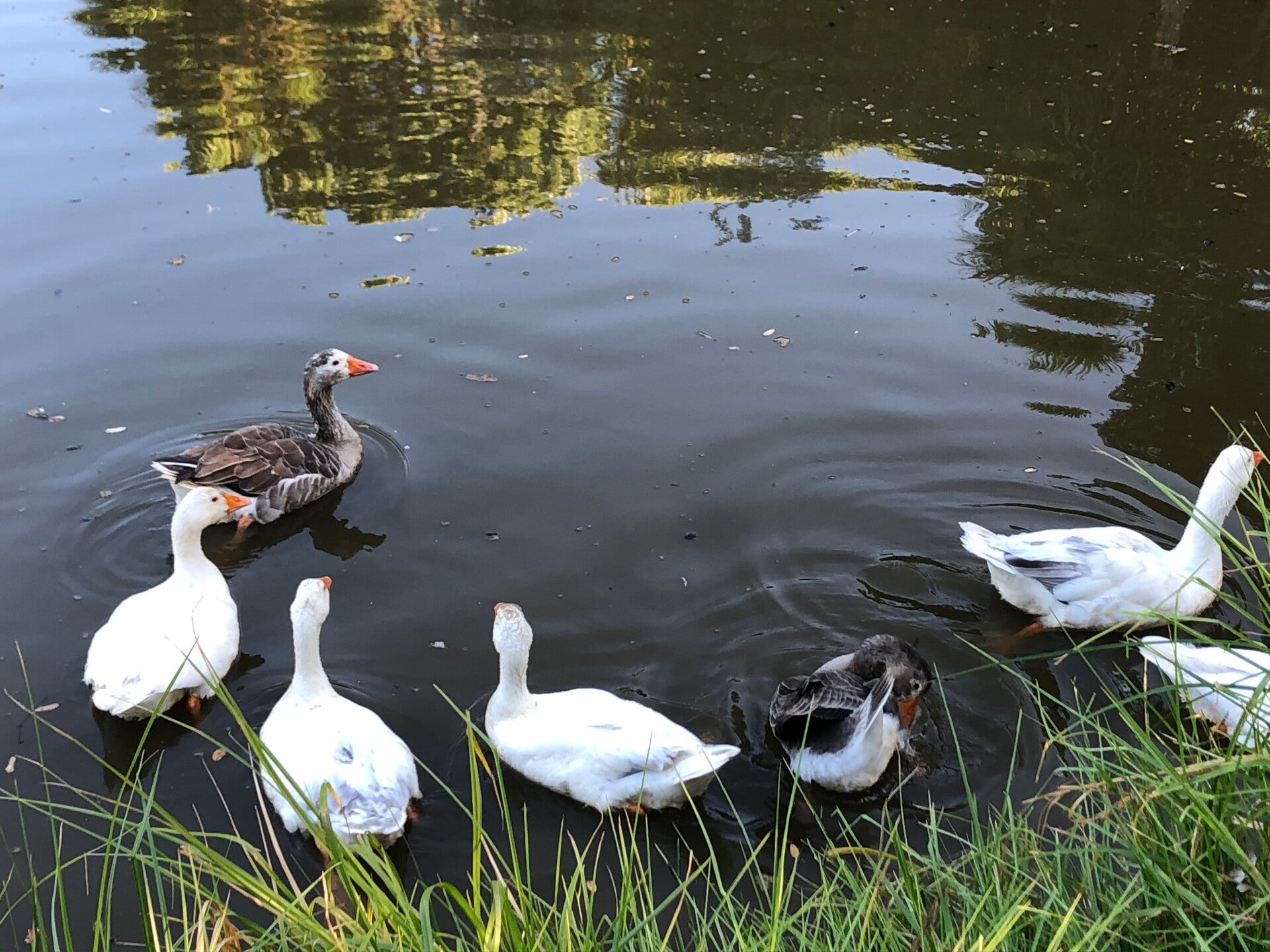
Well, Ma and Titan, the resident black swans in this pond, were having none of that. They promptly 'adopted' the goslings and raised them as their own. As they grew up, these geese became the swans' protectors and the most loyal and loving aunties and uncles to the cygnets who were born to Ma and Titan. They would regularly be seen looking after the cygnets- whether shepherding, guarding, playing with, teaching, disciplining - and were always a part of the convoy when the babies left the pond to graze, or swim in the ocean.
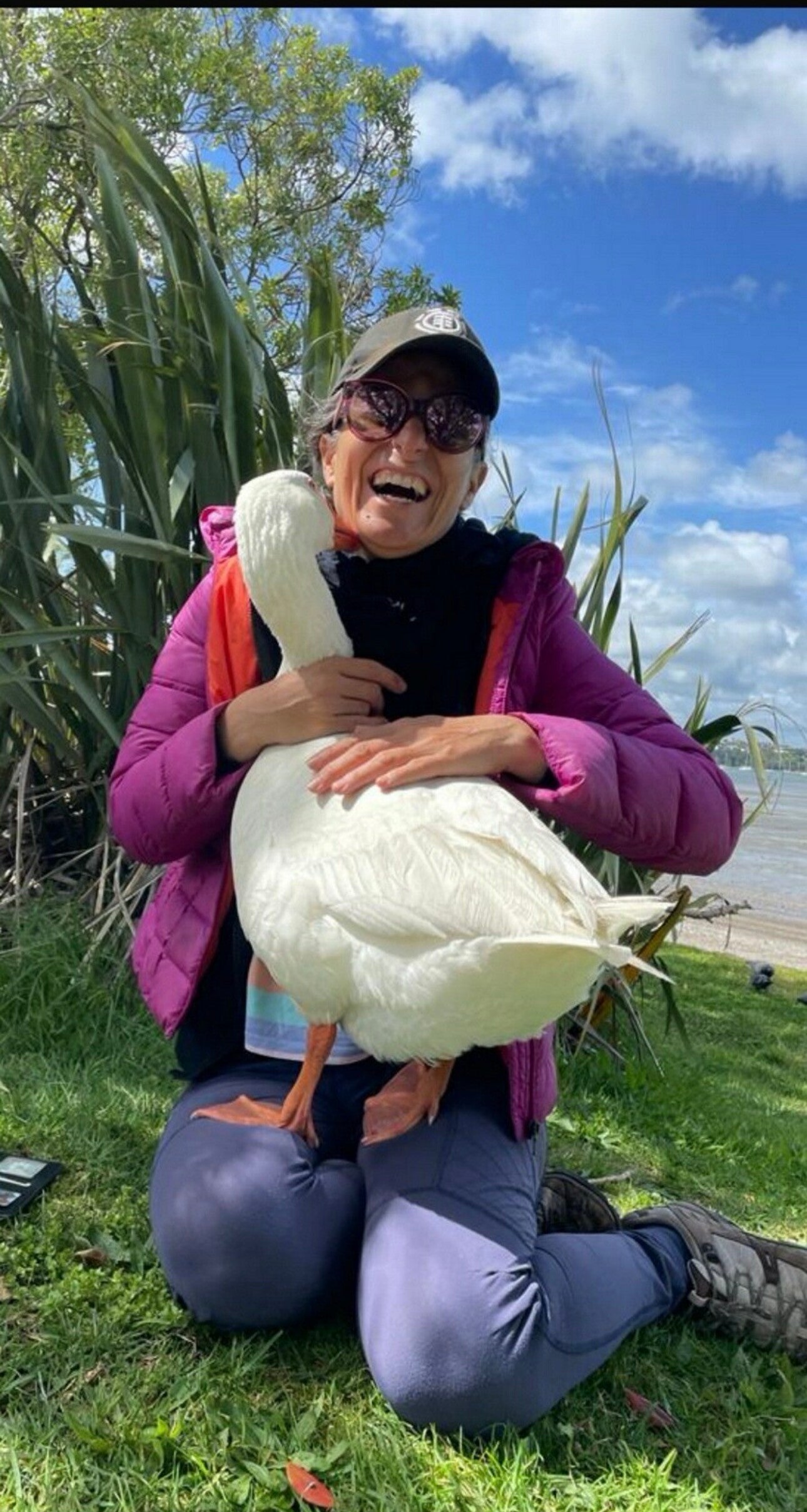
Photos abound of these geese at Tahuna, who for years captured the hearts of those who met them. For years, they happily interacted with humans, even climbing into laps to give big goose hugs. As at 2026, there is only one left. The lives of the first four, as I have heard it, were all lost to the cruelty of humans; the fifth went missing in winter 2024. Now there is just one left, Goosie.
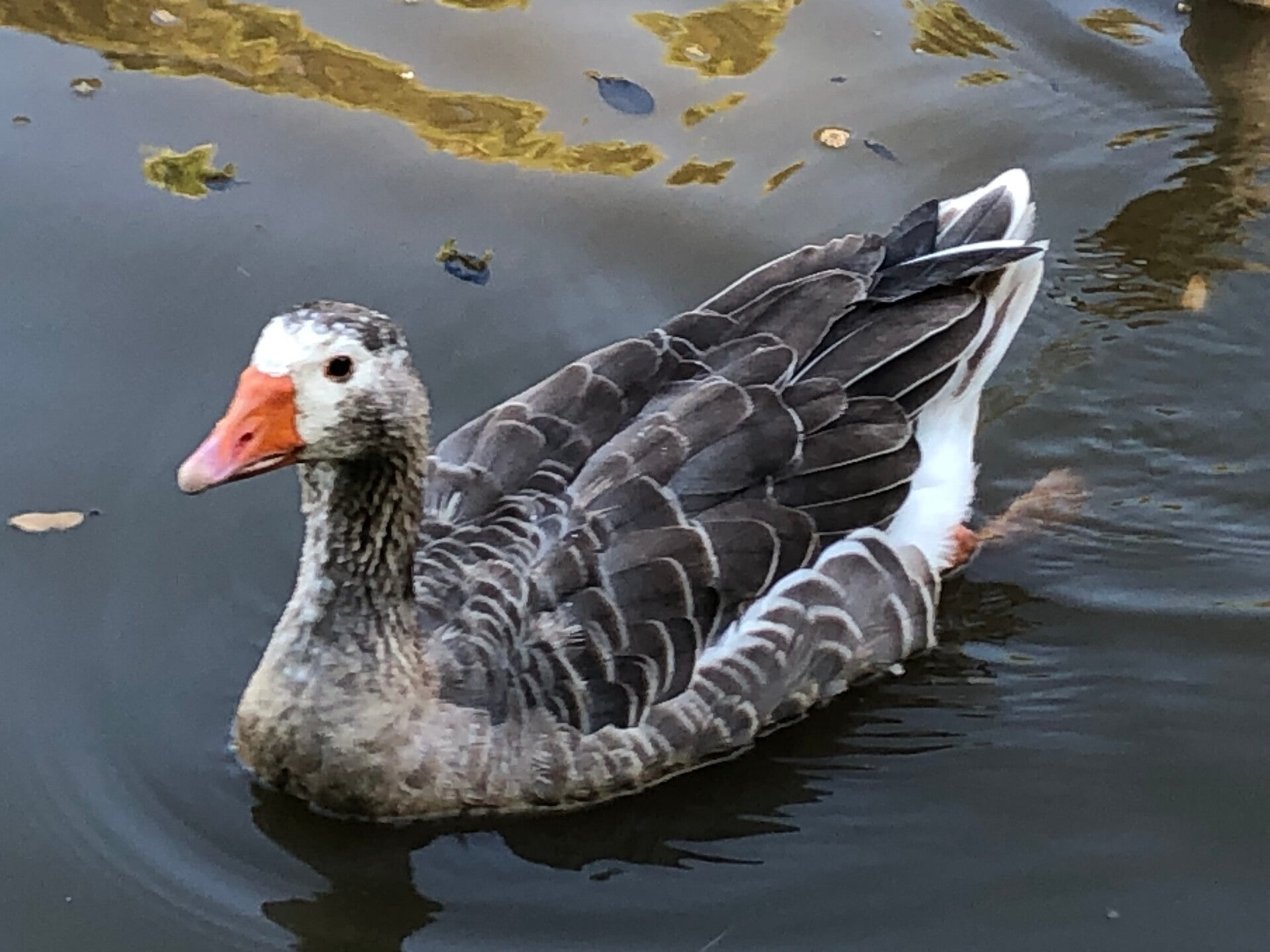
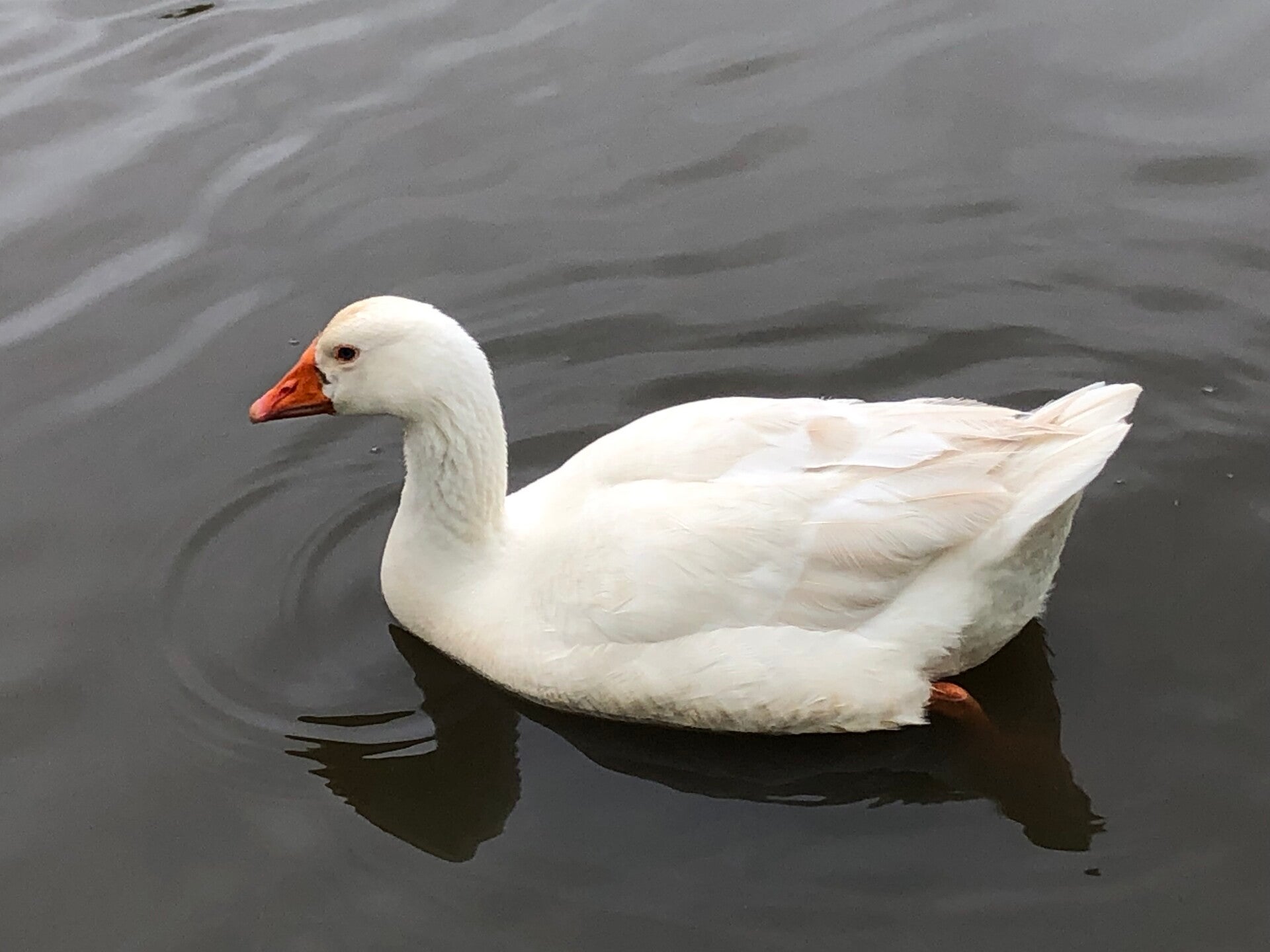
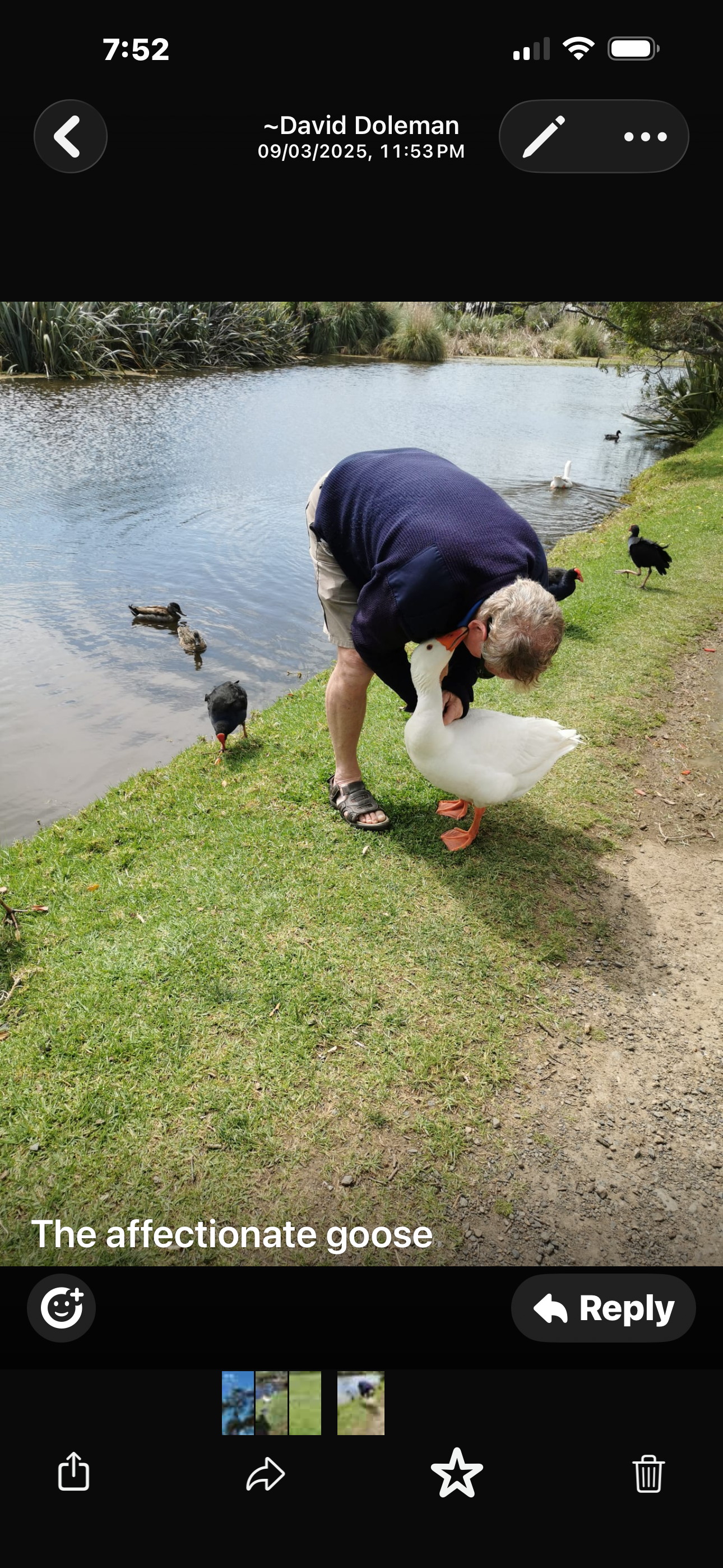
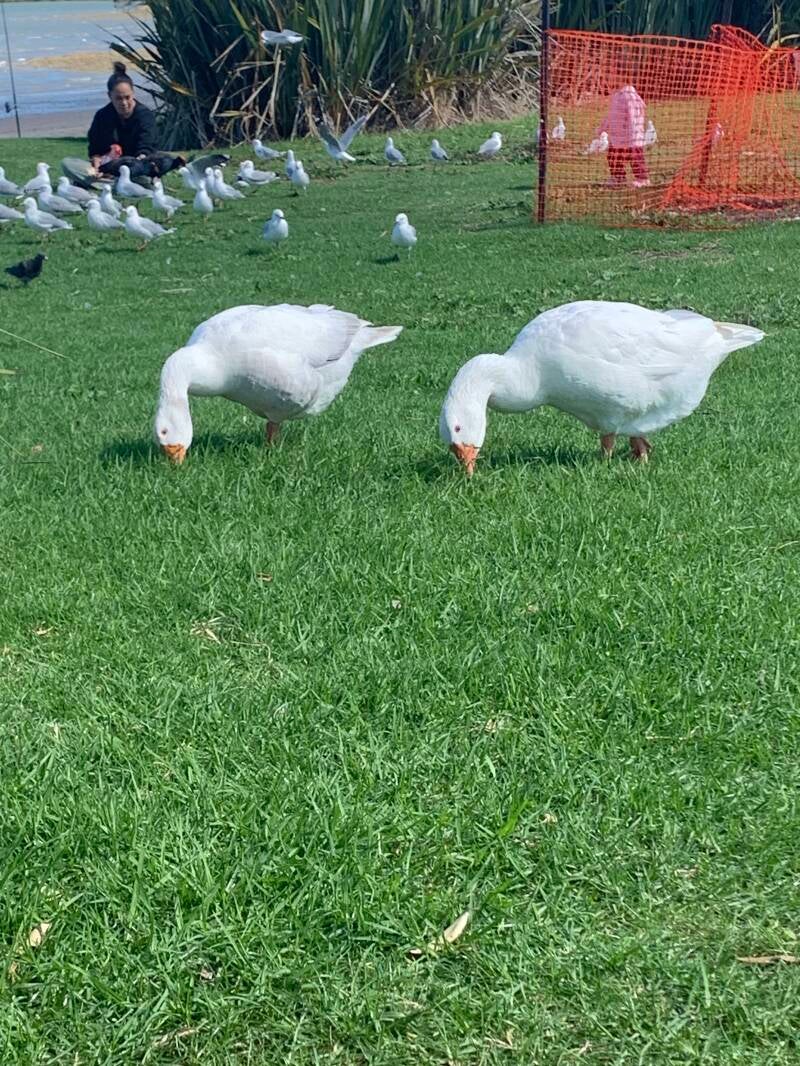
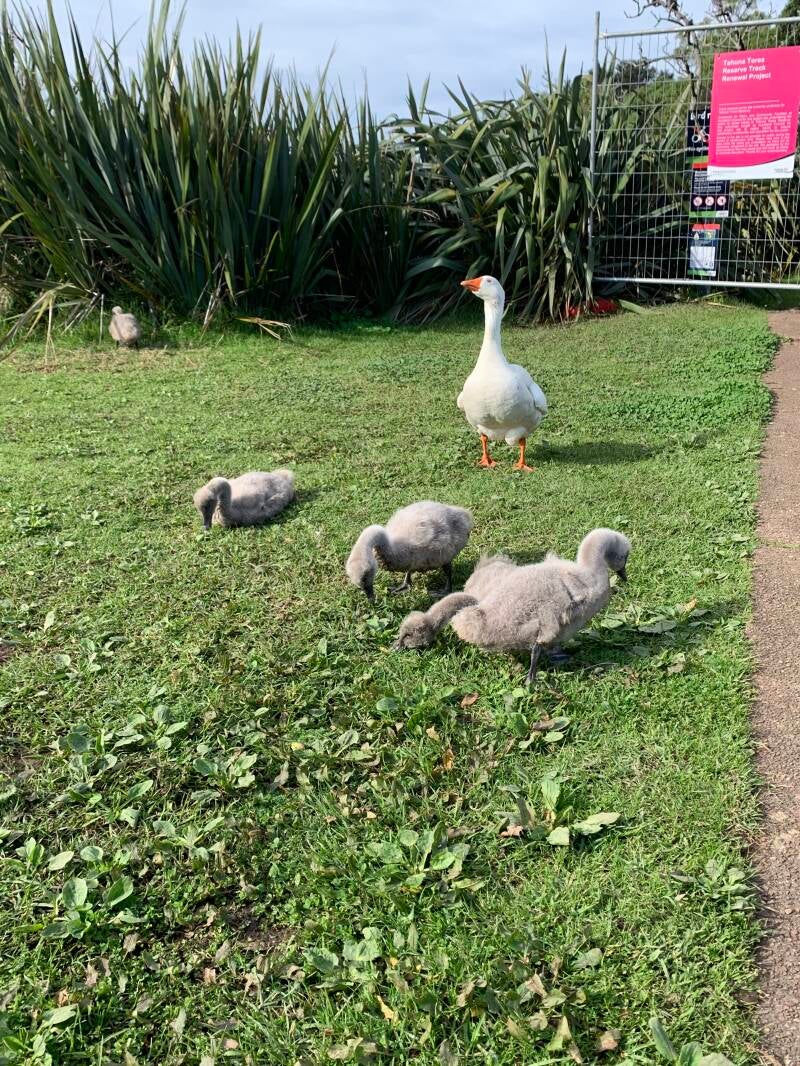
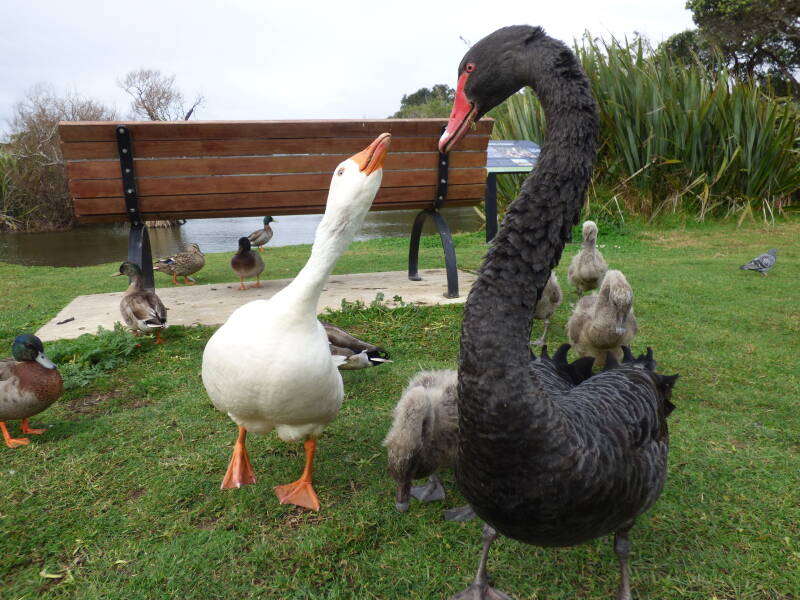
And so it was in January 2025, the Swoose family consisting of Ma, Titan, Goosie and three little cygnets born at Christmastime. By February, they had lost one cygnet. And then the pond went into drought. As swans can't carry their young, the rapidly declining water levels in the pond were a fatal threat to the cygnets. The waist high silt at the bottom of the pond rendering it impossible for the adult swans to walk without being suctioned into the muck. With no options left to them, all they could do was call the cygnets and hope they could clamber up the steep banks to where the parents waited. One of the cygnets could, the other couldn't. Goosie stayed in the pond with the second one for another week, guarding this little one and helping him find food and shelter while the sister moved with the parents between the pond and the ocean.
At this time, I was spending around 8 hours a day down near the pond, bringing in over 20 litres of freshwater every day for the birds to drink and bathe. It was not uncommon to see a queue forming at each of the water containers, with swans, pukeko, ducks, pigeons all waiting their turn. With the pond dried up, the food dried up too, with the remaining pond birds relying heavily on grass and the kindness of visitors to survive.
It was on one of these days, that I watched as Ma, Titan and the sister cygnet swam out to sea, heading down the Tamaki Estuary. Usually they would leave and come back within an hour, but on this day they were gone for much longer, well past the point where the tide begins to rapidly go out, leaving the swans to have to navigate back in on land which leaves them (especially the cygnet) highly vulnerable to predation from dogs.
And so it was with great relief when I finally sighted them coming around the headland and back toward the pond. I knew immediately that something was wrong. Although it is very hard to see cygnets at a distance, swans have a particular way about how they swim in when they have cygnets with them. The usual formation wasn't there and their pace seemed agonisingly slow. When they finally came out of the ocean and crested the grass hill, I waited for the familiar sight of the cygnet to arrive behind her parents' legs. But this day, she didn't come back.
Days later, the last cygnet couldn't be found. I called the Council and begged for someone to come out with a kayak for a search and body recovery. They arrived some hours later and launched the kayak, with no luck. I had followed the contours of the pond on foot, through the forest. The team finished and we were walking back when a single shaft of light came down through the canopy of the trees, and for a split second lit up the silvery white edge of the missing cygnet tucked into the banks, under thick foliage. If I had been looking in any other direction, I would have missed him.
We scrambled down the bank and found him beached in the mud, barely alive and incredibly weak. I grabbed a container and some water, and put it next to him with some fresh grass I picked, but he was not interested, and was barely moving. I went and got some seed and put it near him, and waited. We lifted him out of the mud to where the water began in the hopes that maybe he would attempt to move back toward the Goose, but he just turned around and beached himself under the tree again.
It was an agonisingly long time later before he finally reached toward the bowls, and very slowly sipped at the water. Over the course of the day, he would eventually begin eating the seed and grass. Buoyed by hope, we fetched a large storage container and filled it with fresh water and carried him up from under the tree. We placed him in the container and let him just float in the water. Eventually he started becoming more animated and stretched his little body out; the head weight of the mud no longer such a burden.
We repeated this frequently over the next 24 hours, guarding him, feeding and hydrating him, giving him time in the water. I was so grateful that he knew me so well; I was no threat to him and he showed no signs of distress as I lifted and lowered his little body. Nights were excruciating, as it meant leaving him under that tree, alone, knowing that he was easy prey and had so little strength left.
One morning I arrived and went to find him and he was gone. I ran along the pond edge, frantic. And then there he was - further down the pond toward where he last was seen before he went missing. And so it was that for the next 10 or so days he would place himself at the grass edge, just over the path from where his Mum and Dad, and Goose, were now living in the ocean. And he would occasionally let out a little peep in their direction. I began putting the large swimming container in the space between where he had now sited himself and where they were and together we would sit, and he would bob in the water, where I knew he could see them and they could see him.


Meet the triplets - Snowball, Cocoa and Mojo (2025)
text
Meet Brutus, Bette, Plum and Pudding (2025)
text